
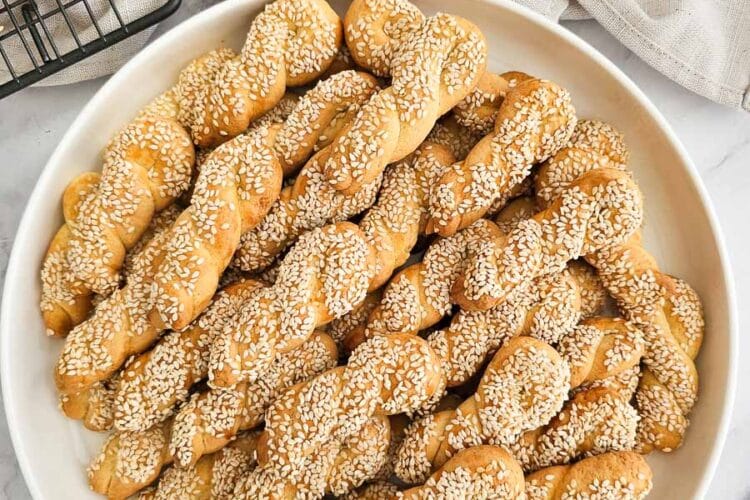
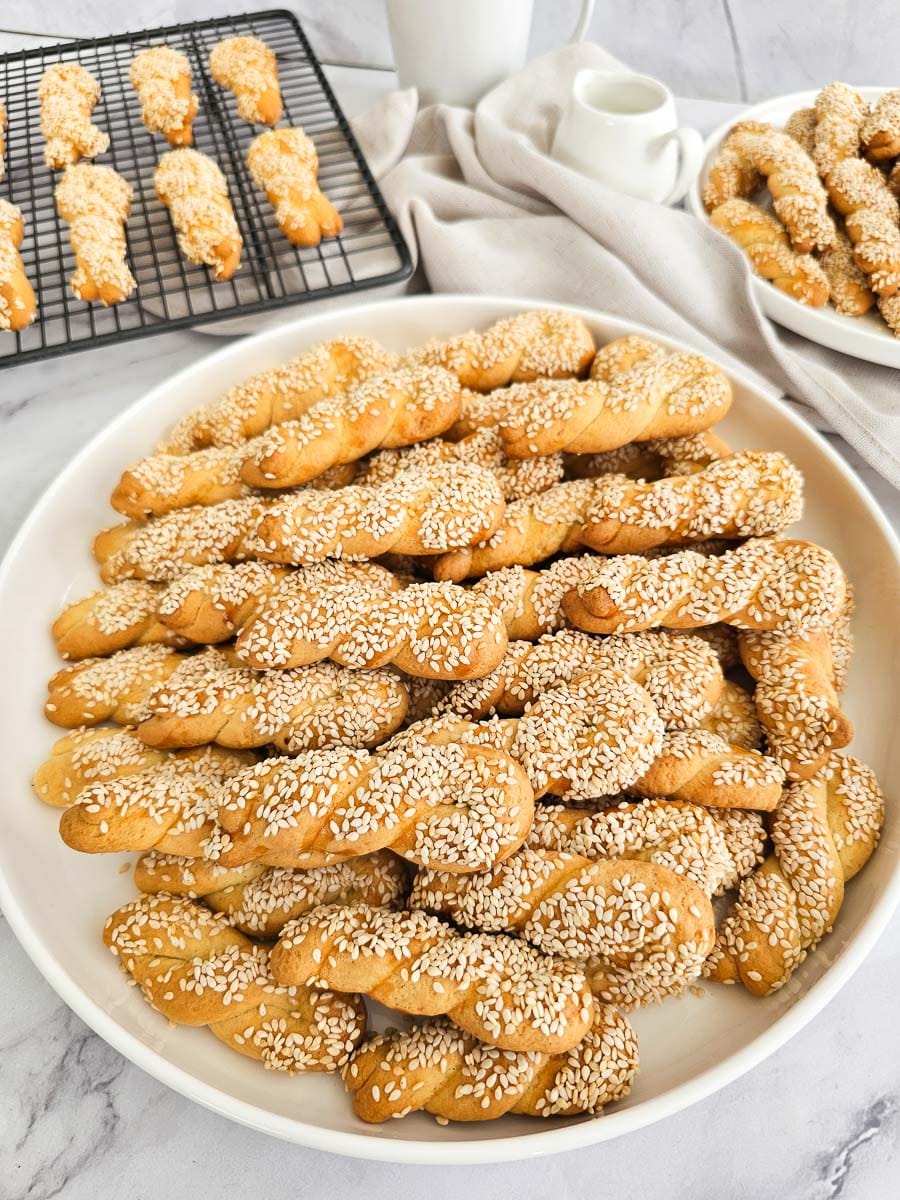
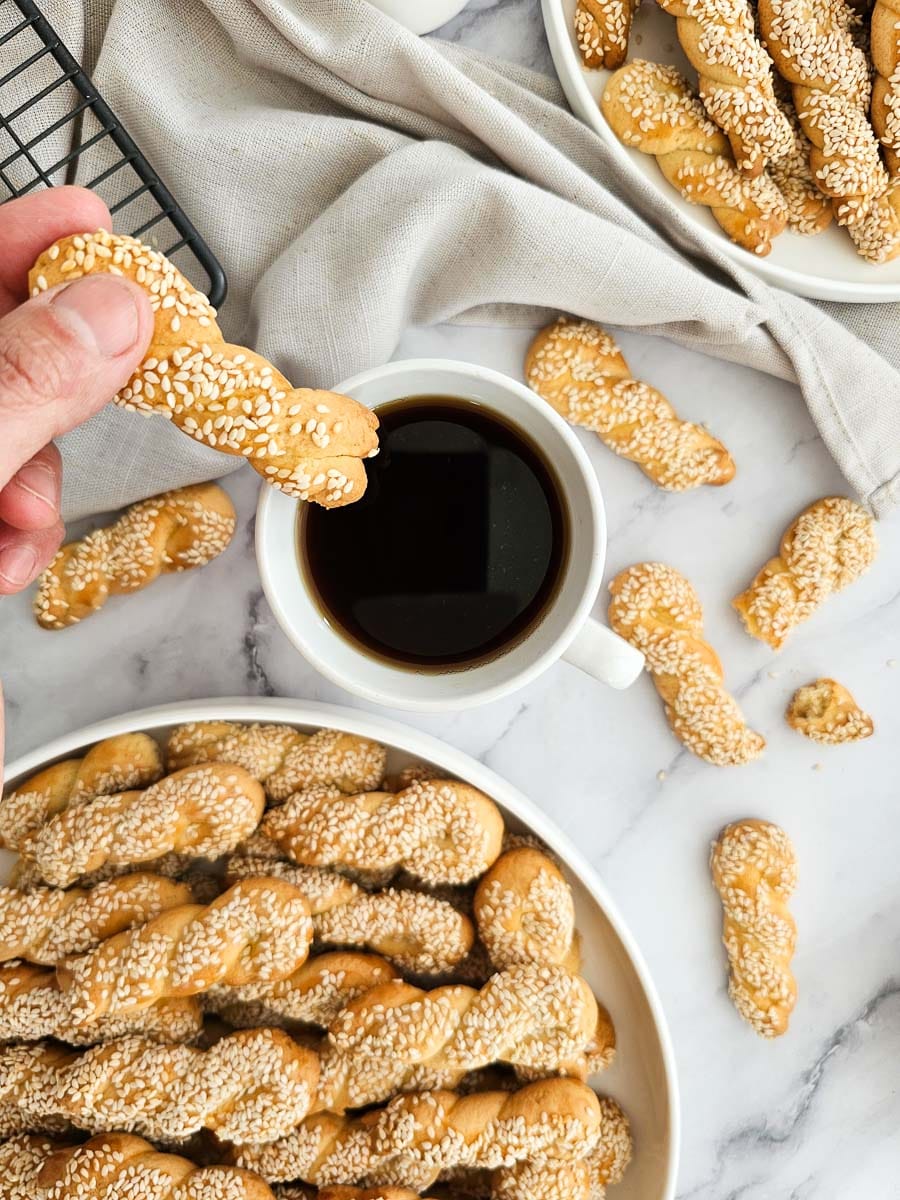
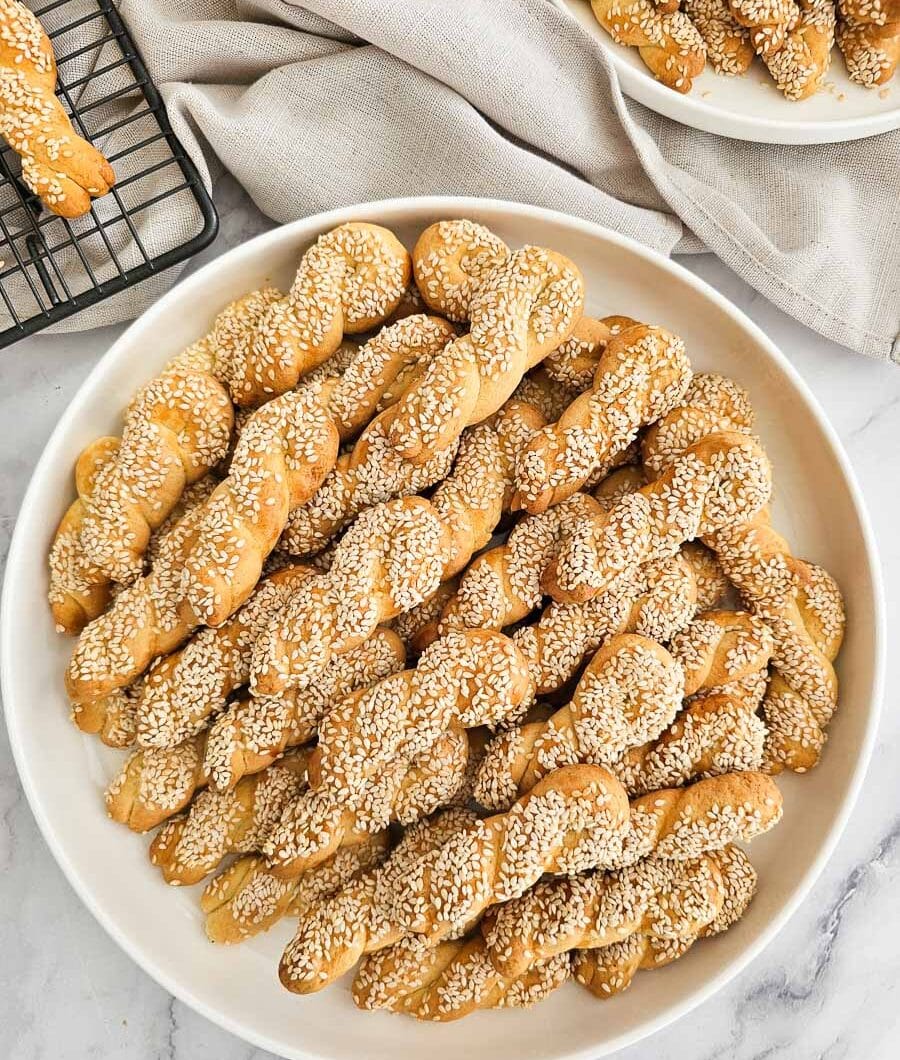
If you love a crunchy biscuit that keeps well and pairs perfectly with coffee, these Koulourakia might just become your new favourite. In Greek homes, certain biscuits are always on hand for guests, for coffee, and for moments of remembrance. These Koulourakia are one of them.
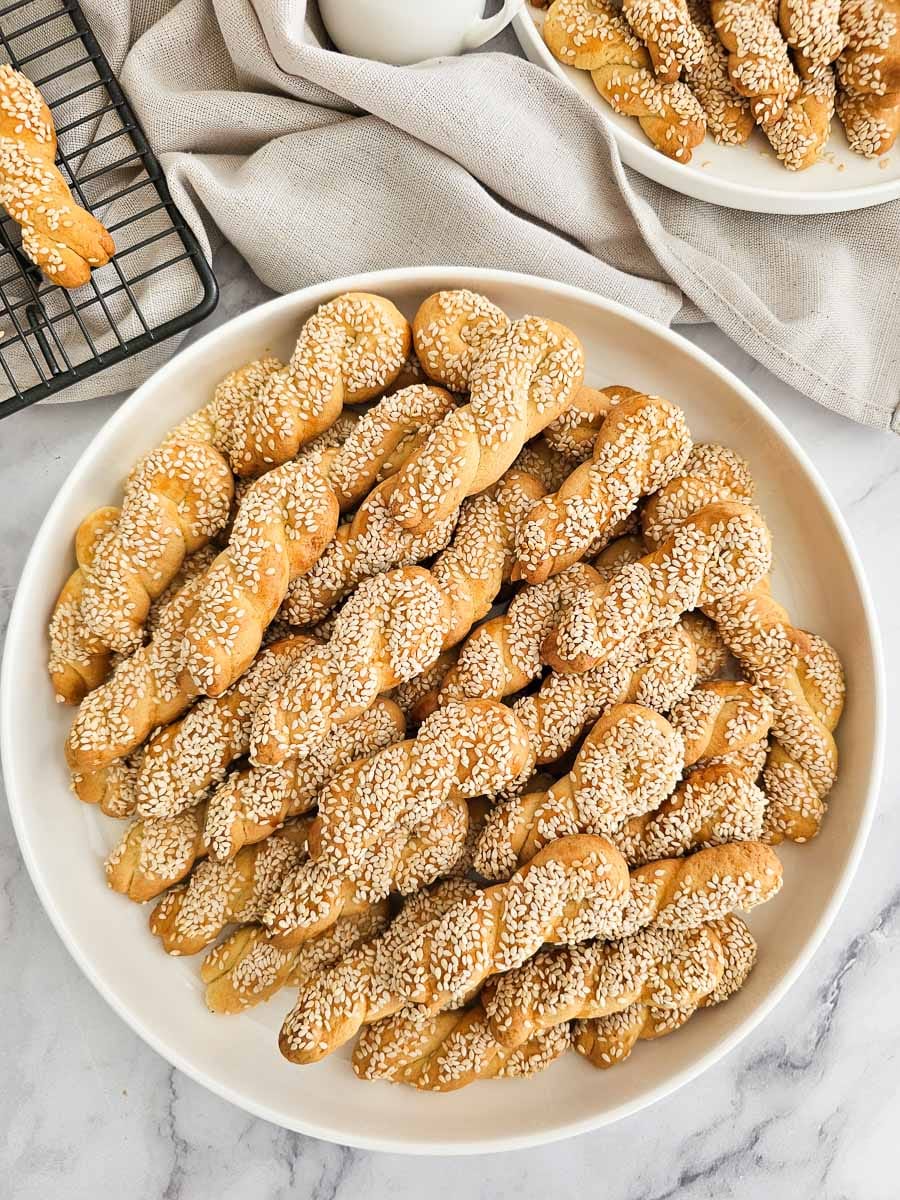
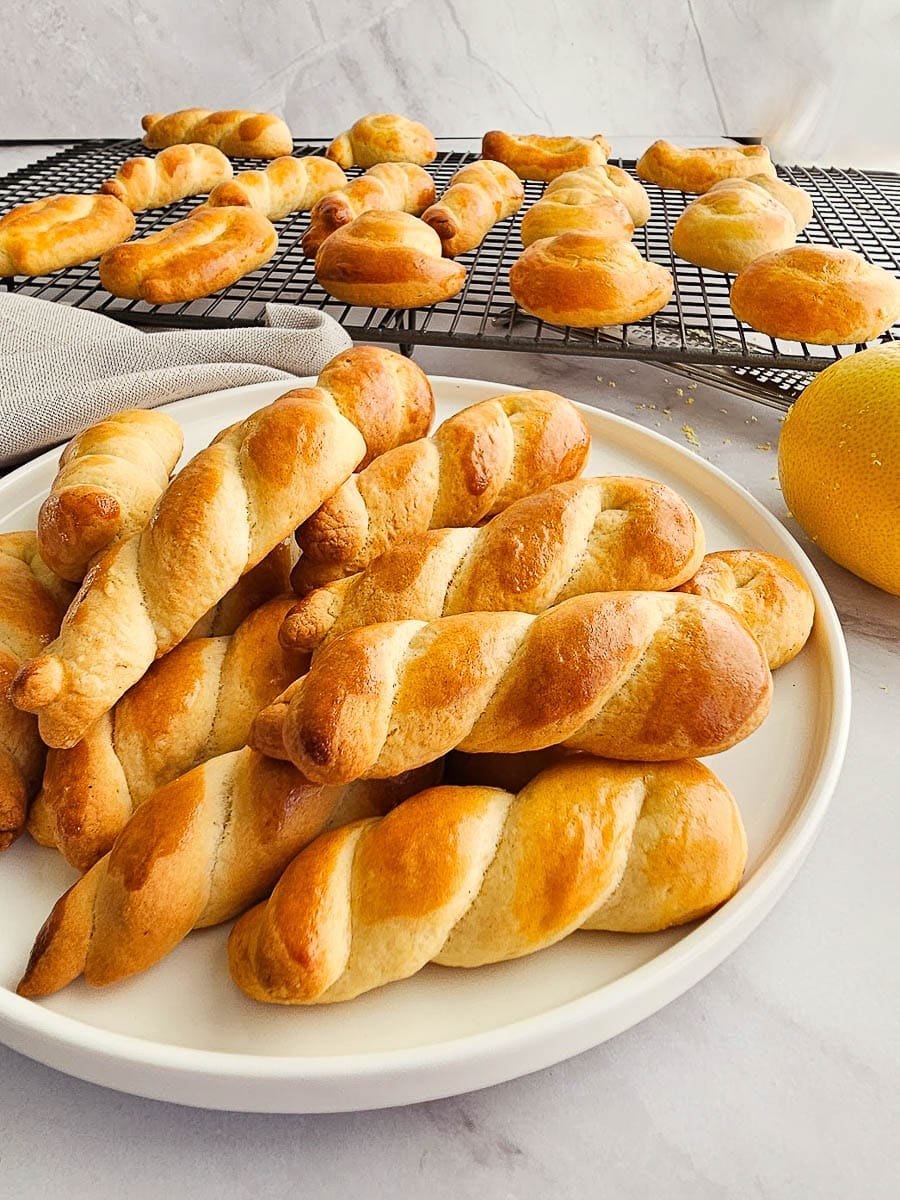
This Koulourakia recipe is my absolute favourite. Many years ago, my aunty’s neighbour, who loves cooking and sharing food, shared his mum’s recipe with my aunty and my mum, and it has been a family favourite ever since. Unlike the traditional Greek Easter Cookies (Koulourakia), which have a crunchy exterior and a soft interior, this recipe makes crunchy Koulourakia, with a crisp exterior and an extra-crunchy interior, while keeping all the classic flavours. We bake these year-round.
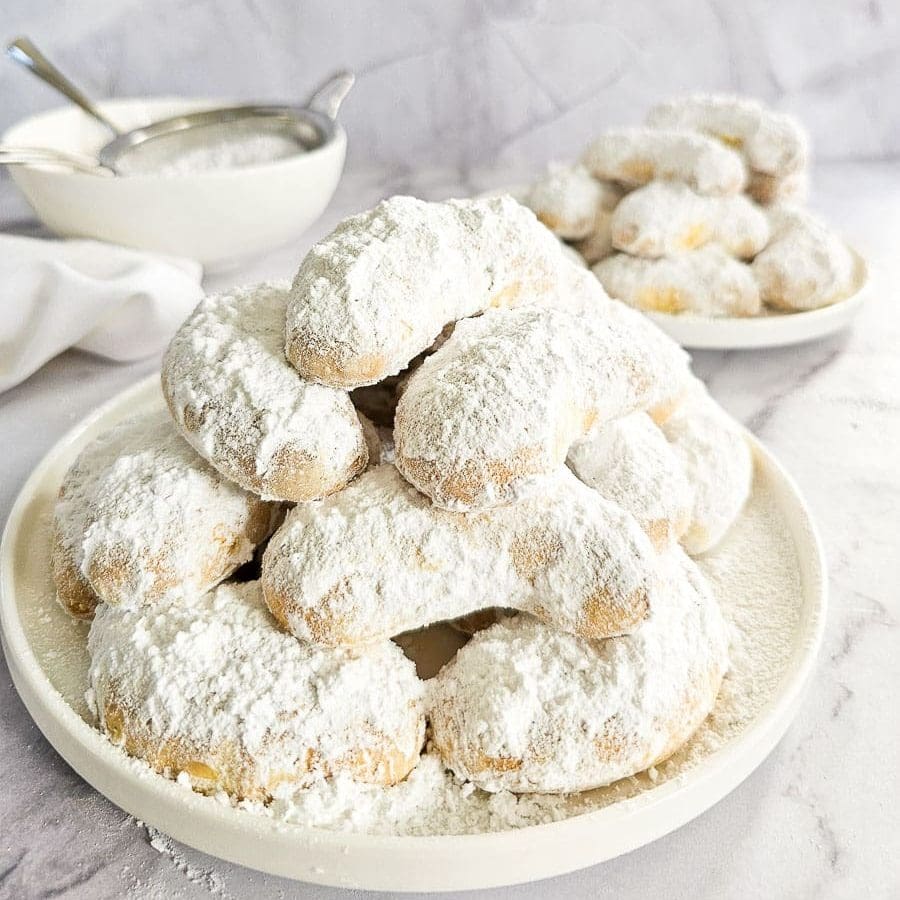
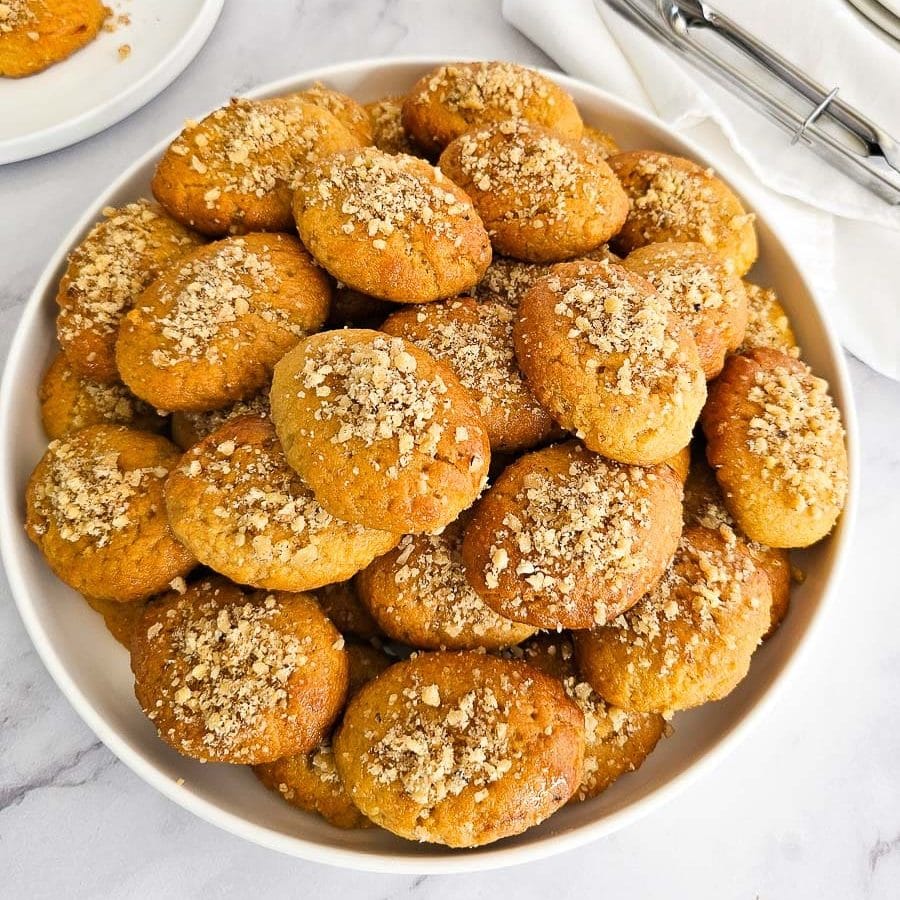
These cookies use the same ingredients as the Easter version but skip the lemon zest, with slightly less sugar and fewer eggs. My mum’s pantry is always stocked with them, alongside her Greek Almond Shortbread Cookies (Kourambiedes) and Melomakarona (Greek Honey Cookies).
We also serve them with Paximadia, especially at funerals or memorials, where simple, long-keeping biscuits are traditionally offered to guests.
Ingredients for Koulourakia (Greek Butter Cookies)
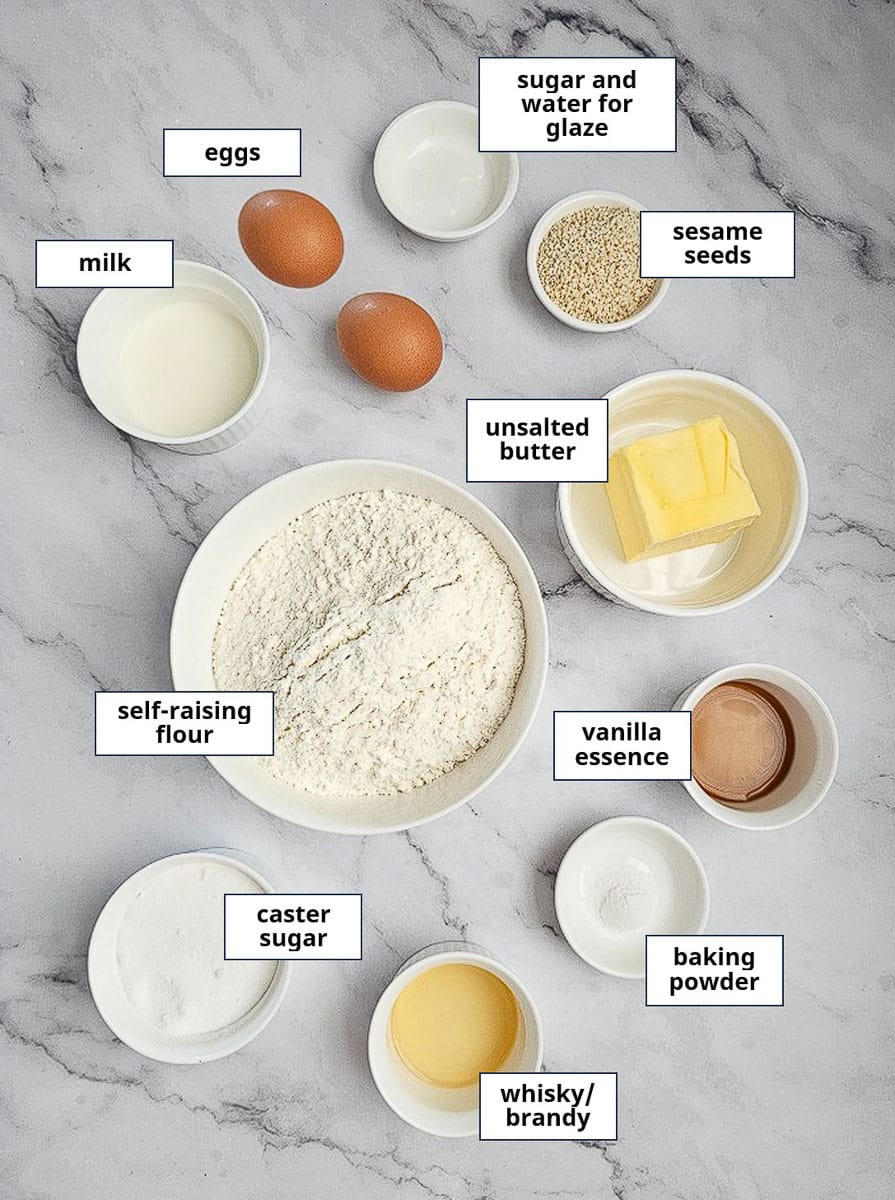
- Unsalted butter: Provides richness and flavour to the cookies. Ensure it’s softened at room temperature for easy mixing.
- Caster sugar: Adds sweetness and helps to tenderise the dough.
- Eggs: Provide structure, moisture, and richness to the cookies.
- Milk: Use full-cream milk. Full-cream milk adds richness and moisture to the dough, resulting in softer cookies.
- Brandy/whisky: Gives a subtle, warm flavour. Alternatively, substitute with vanilla essence if you do not want to use alcohol.
- Vanilla essence: Adds a sweet and aromatic flavour. When substituting vanilla flavourings, vanilla essence and vanilla sugar offer a milder vanilla flavour compared to vanilla extract and vanilla powder, so I usually halve the amount if I add vanilla extract.
- Baking powder: Although the recipe calls for self-raising flour, my mum always adds a touch of baking powder to help the cookies rise and have a light and airy texture.
- Self-raising flour: Helps create a light texture that bakes up crisp and crunchy.
- Egg yolk glaze with sugar: Mixing egg yolk with sugar creates a slightly sweeter glaze that adds a touch of sweetness to the koulourakia while also contributing to a golden colour when baked. The sugar caramelises slightly, enhancing the appearance of the cookies. Add a touch of water to make it easier to brush on.
How to make Koulourakia (Greek Butter Cookies)
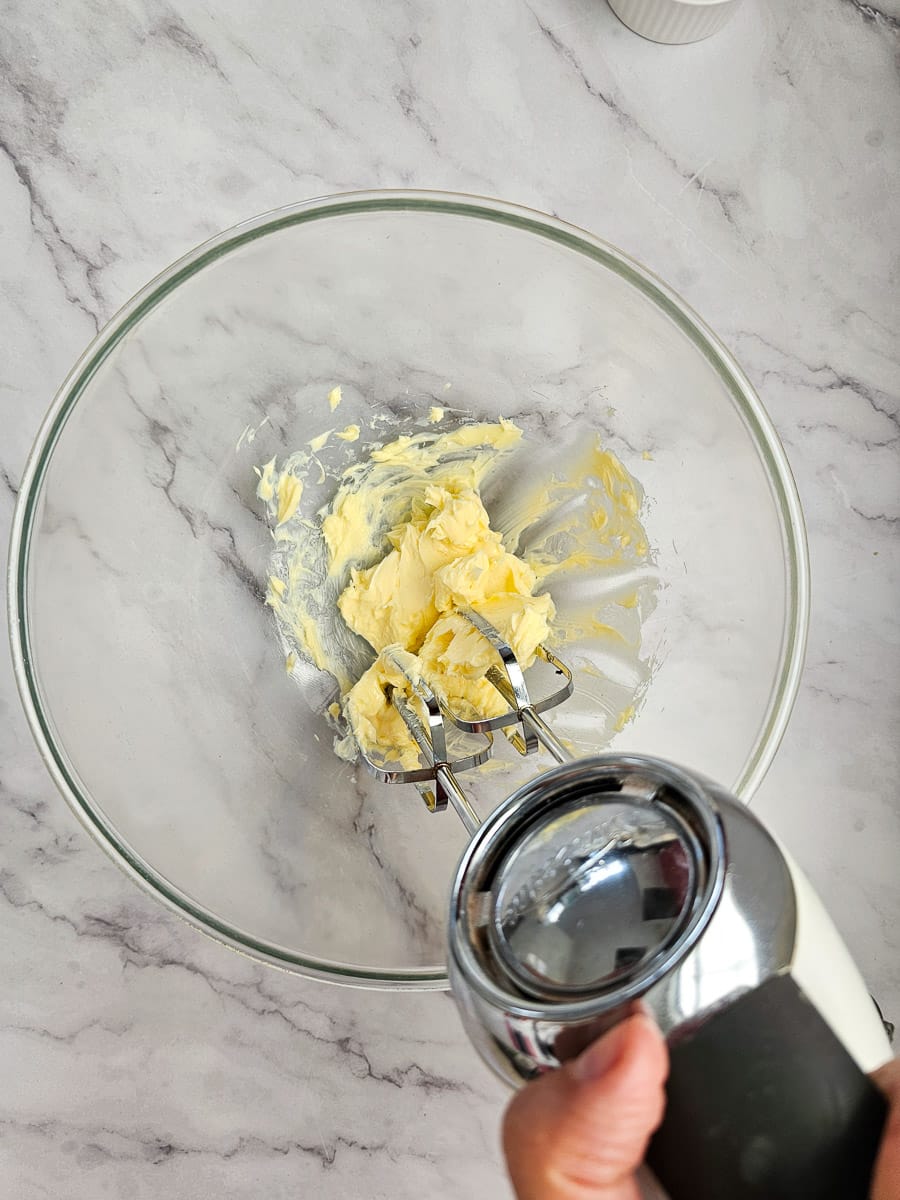
1. Beat butter for 2 minutes.
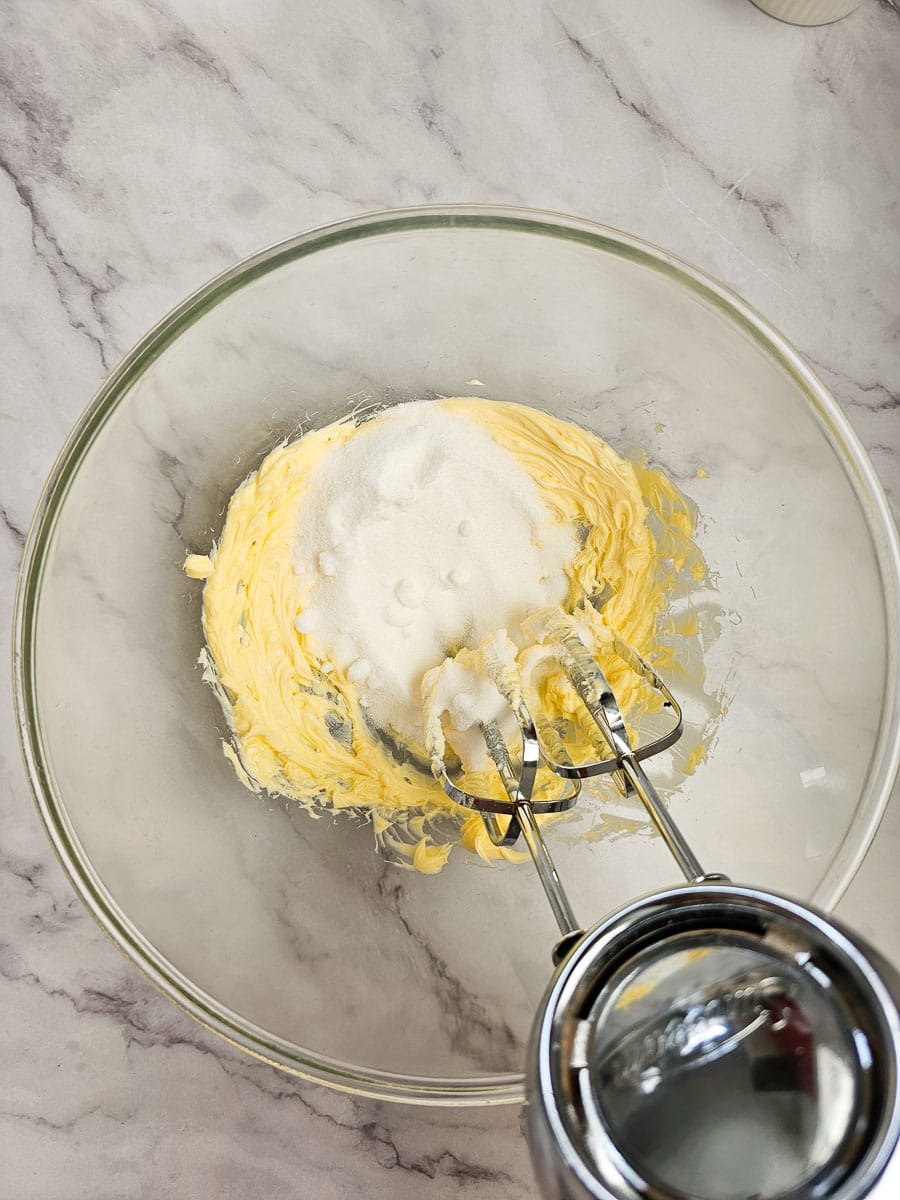
2. Add sugar. Beat on high speed for 3-5 minutes until mixture is creamy.
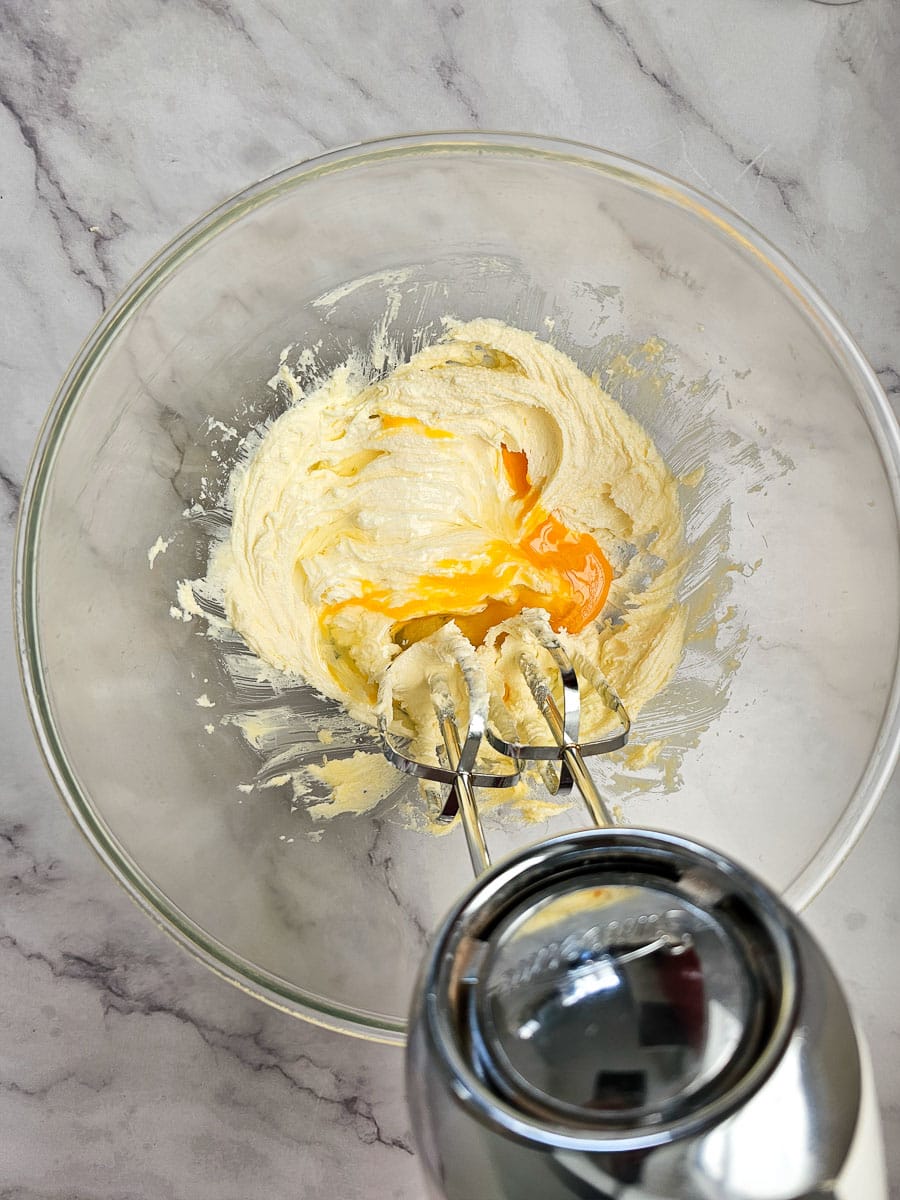
3. Add one whole egg and one egg white and beat on medium speed for a minute.
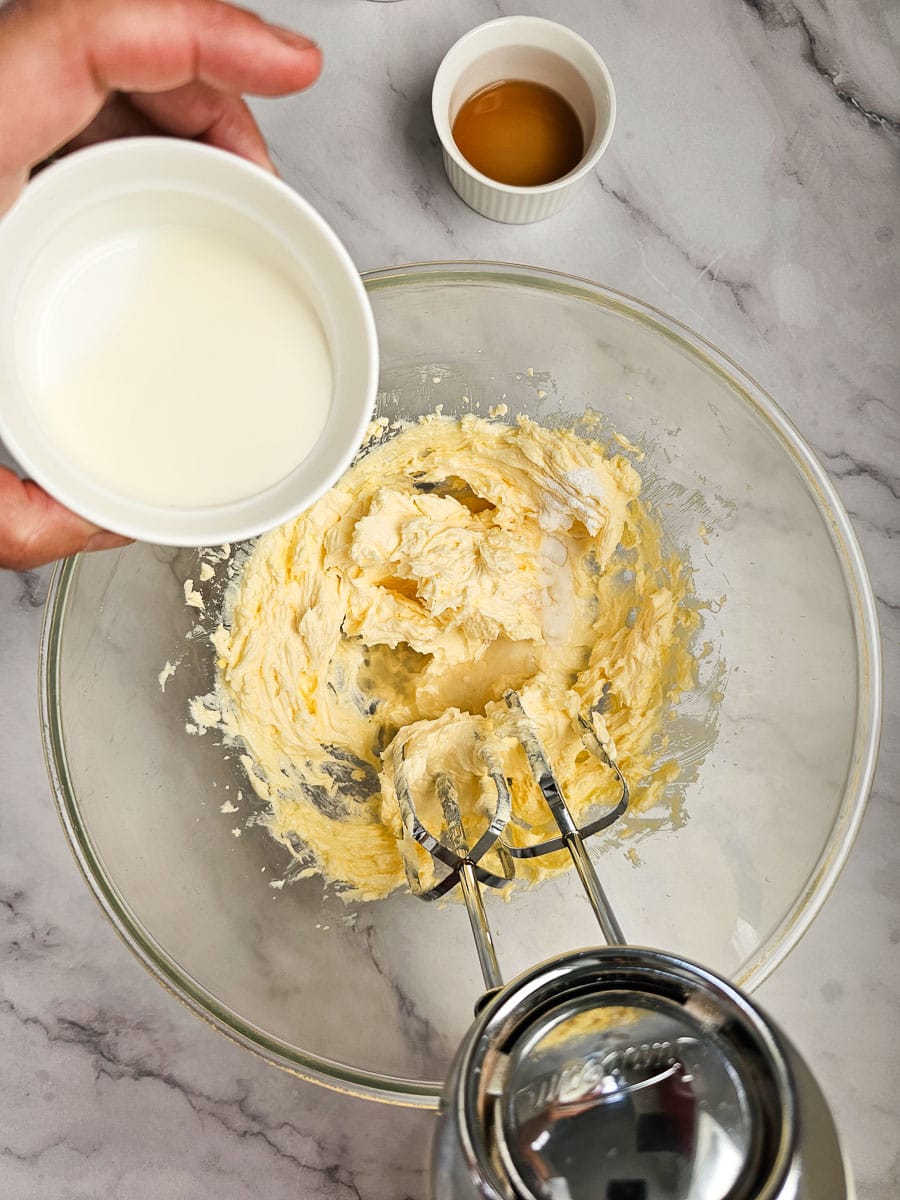
4. Add milk, vanilla essence, baking powder and brandy. Beat to combine.
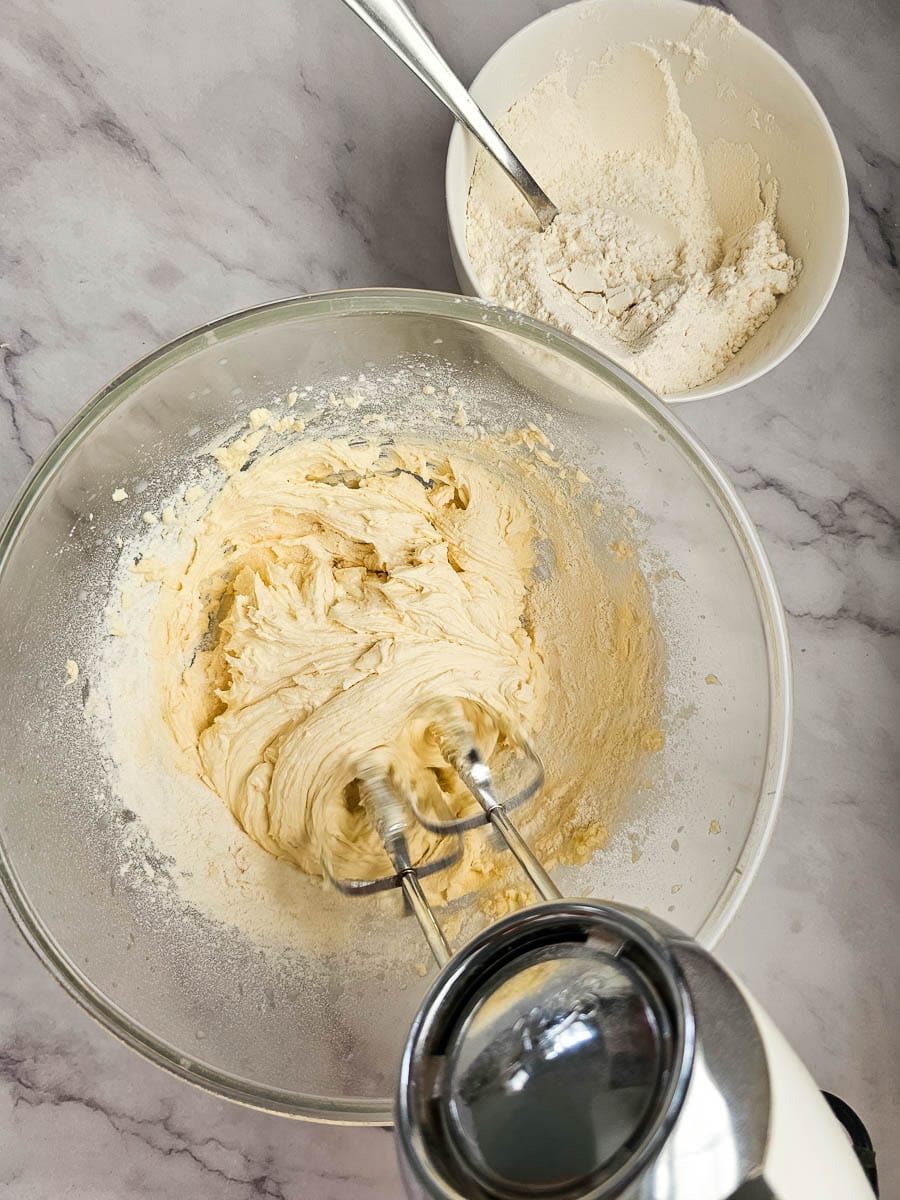
5. On low speed, gradually add 2 cups of sifted flour to the mixture.
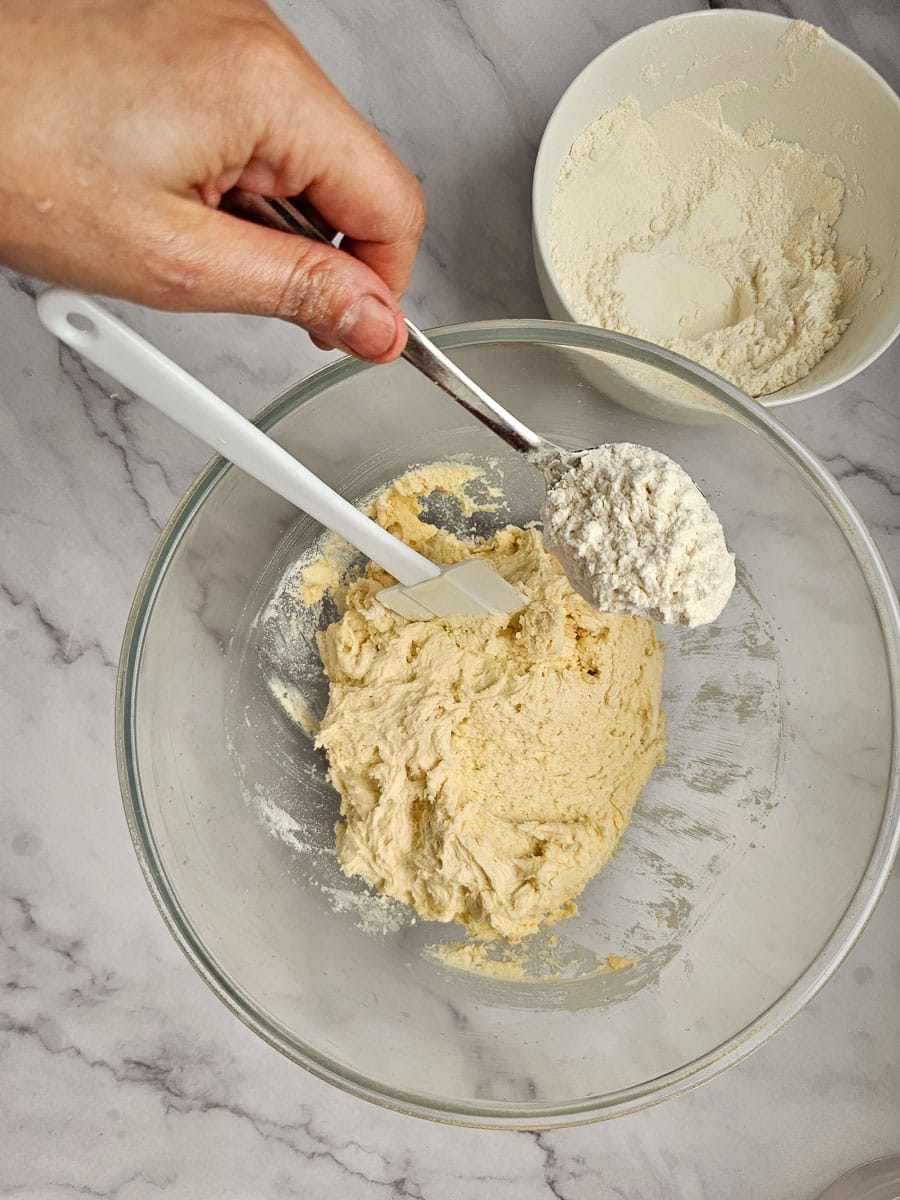
6. Gently fold in the remaining flour, one tablespoon at a time, until the dough reaches the right consistency.
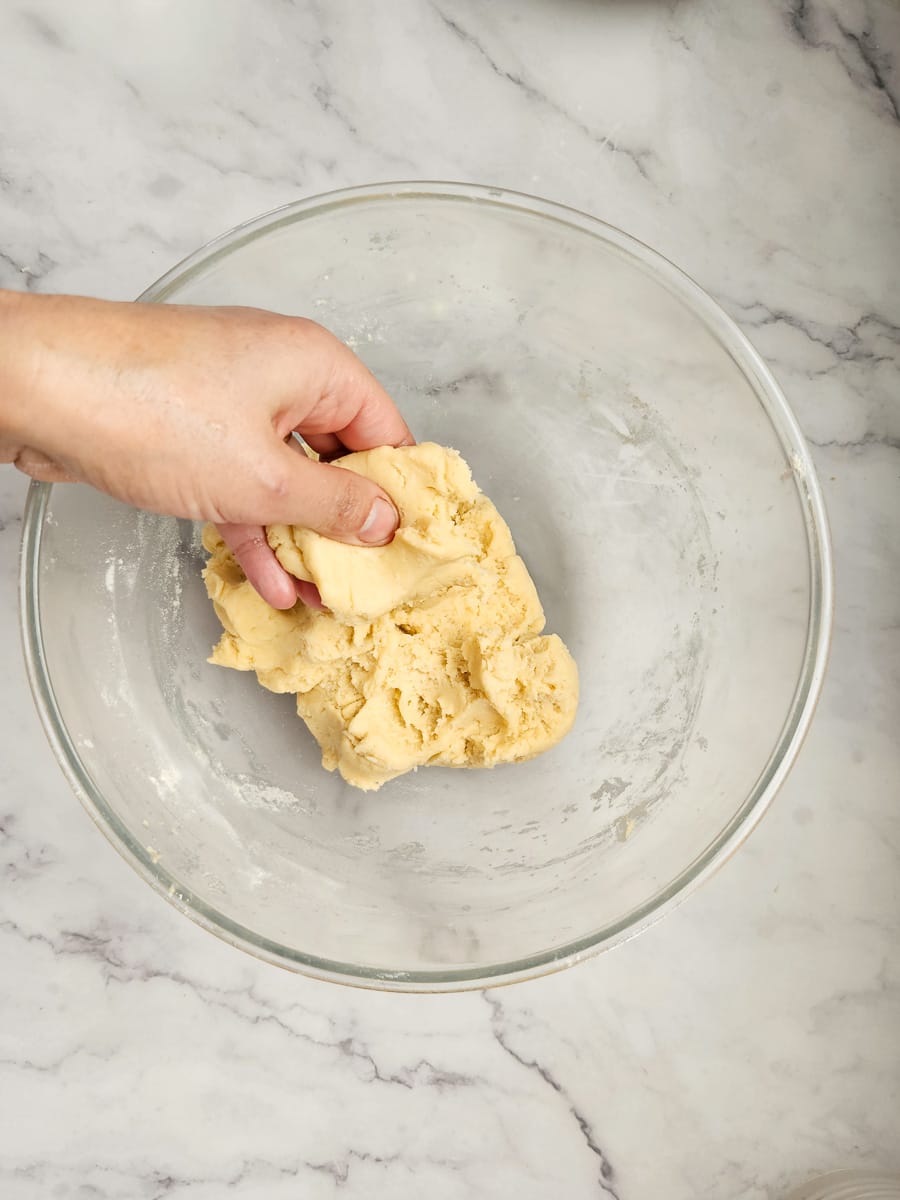
7. It should be soft and slightly sticky, but not stick to your hands when shaping.
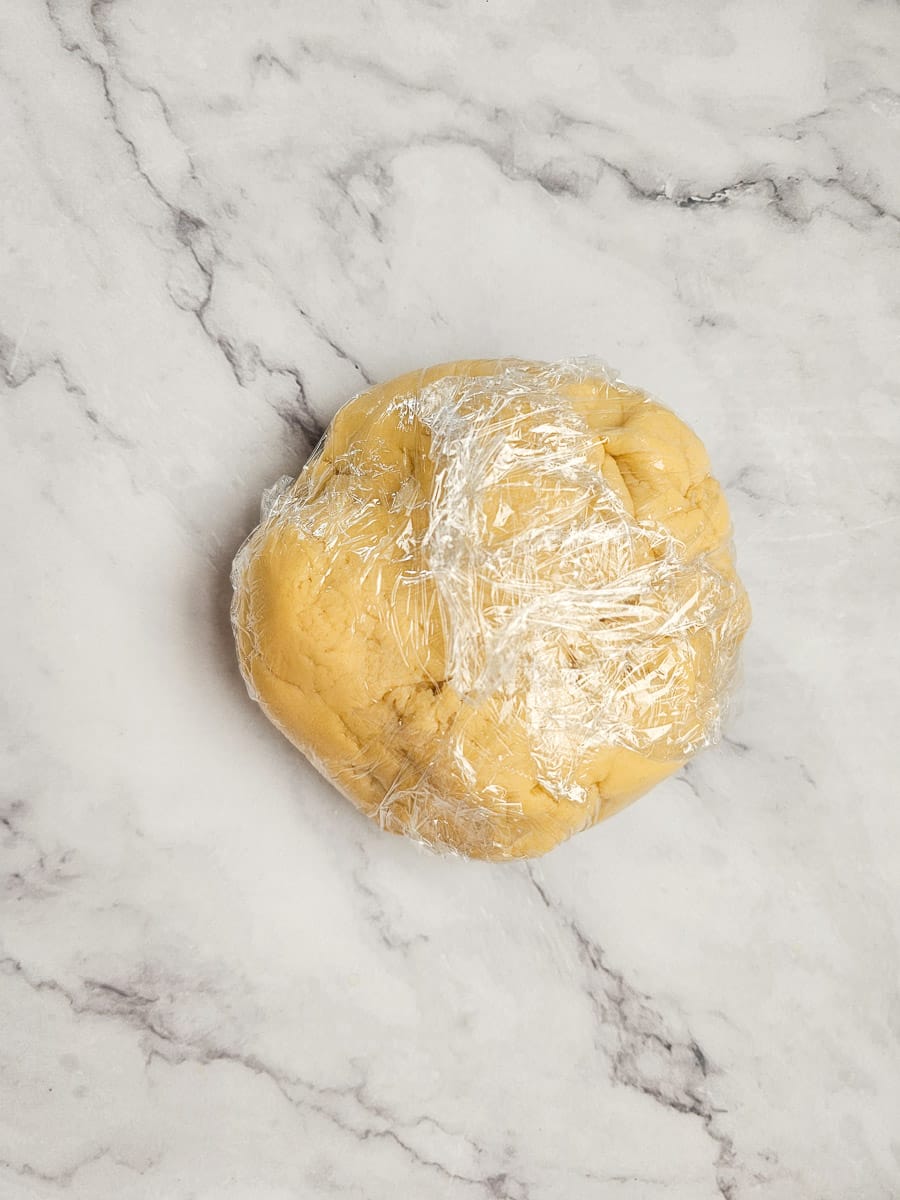
8. If time, wrap with cling wrap and chill for 30 minutes.
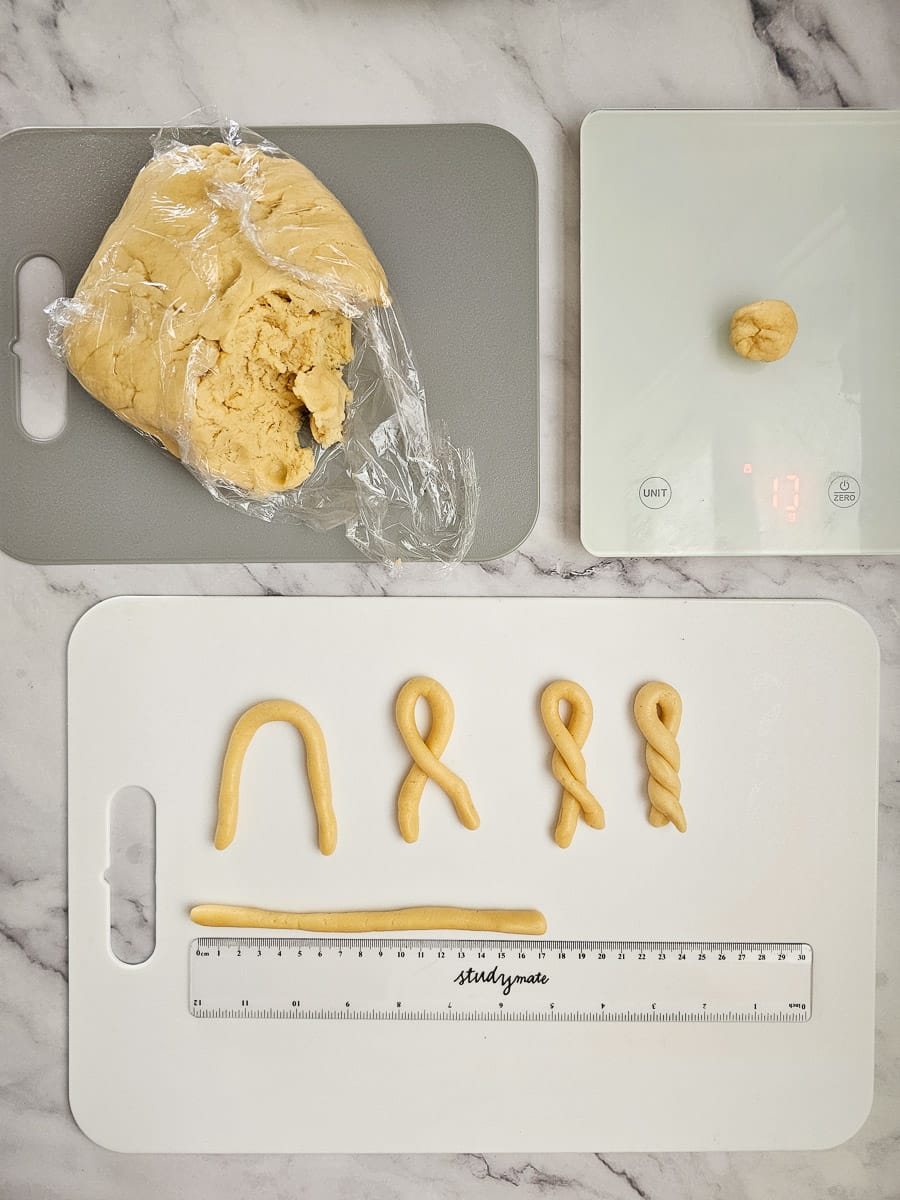
9. Take tablespoons of dough (about 13–14 g / 0.45–0.5 oz) and roll each into a length of approximately 18–20 cm (7–8 inches), then shape.
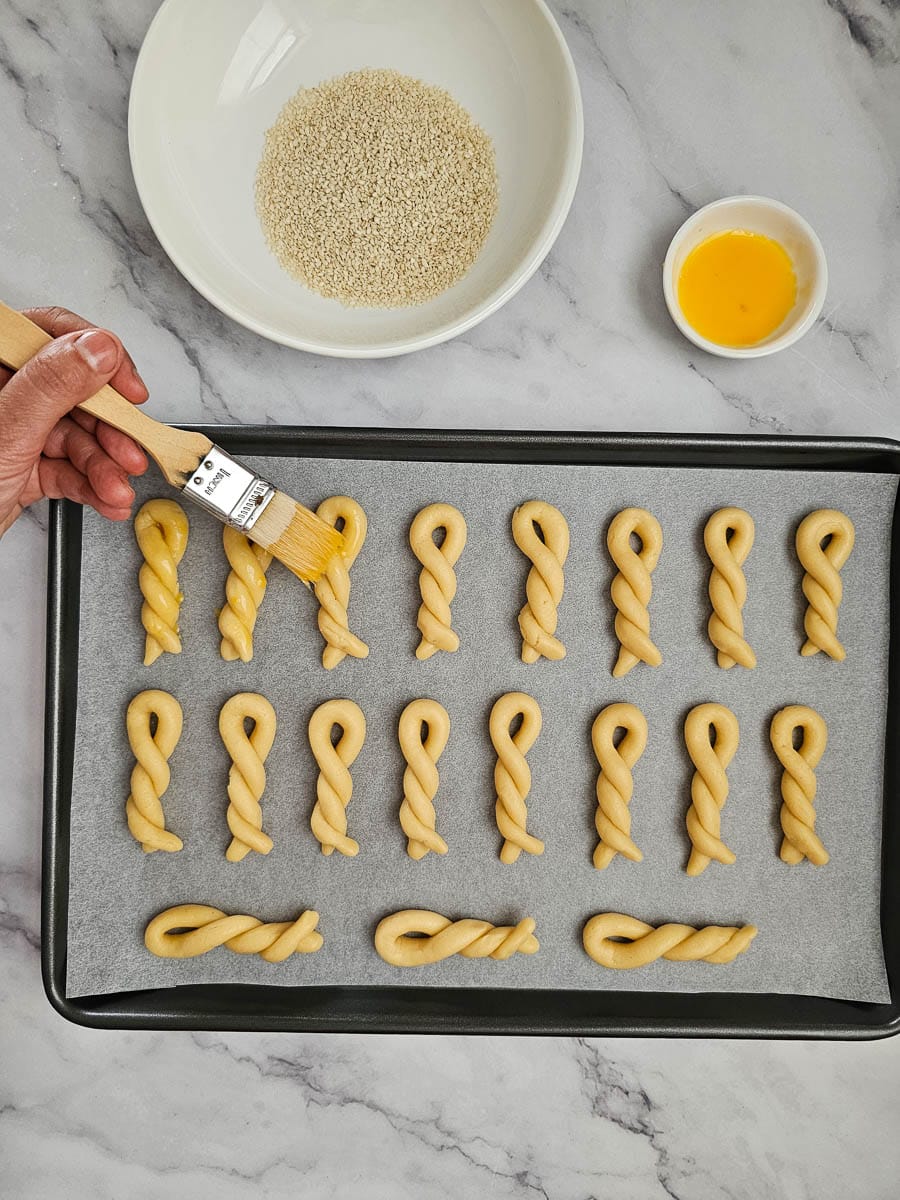
10. Place on baking tray and brush with egg yolk mixture.
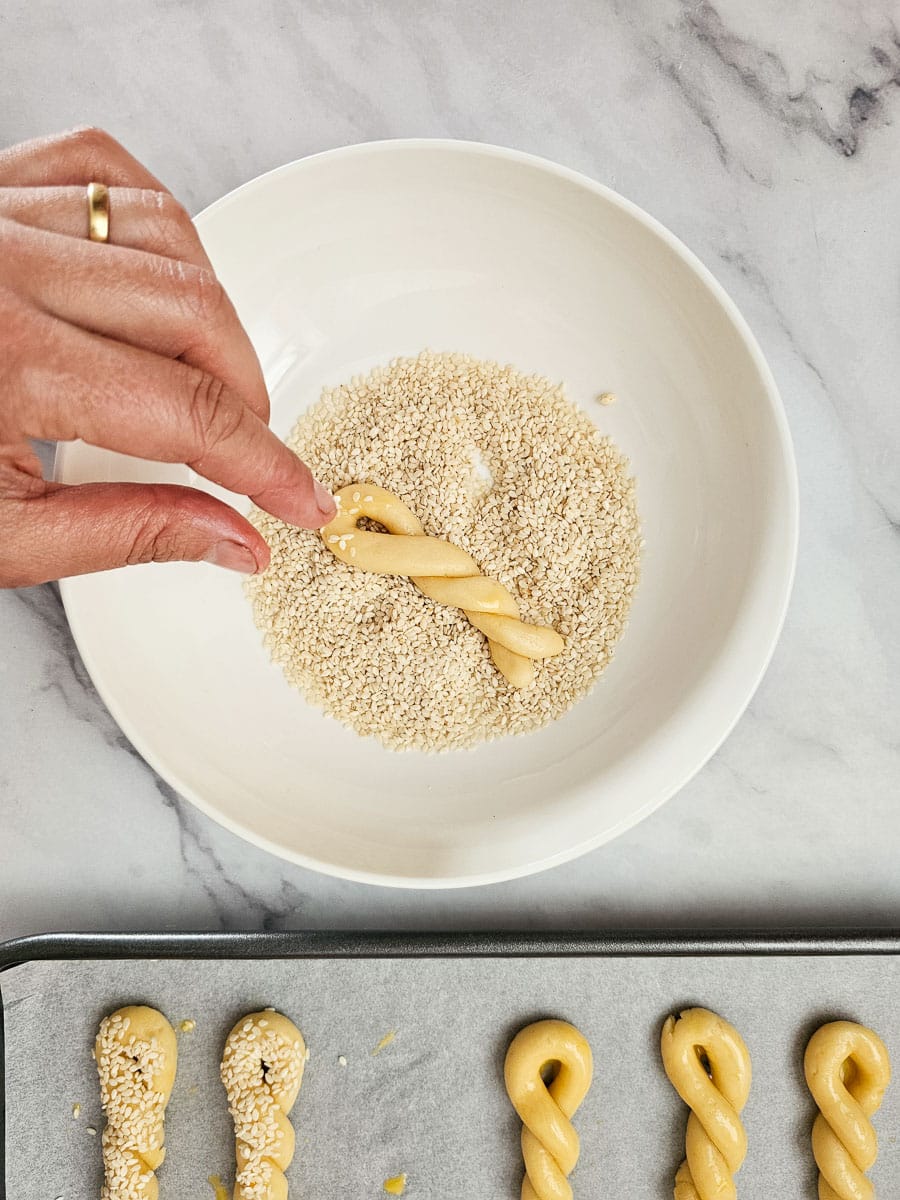
11. Dip the top of each cookie into the sesame seeds.
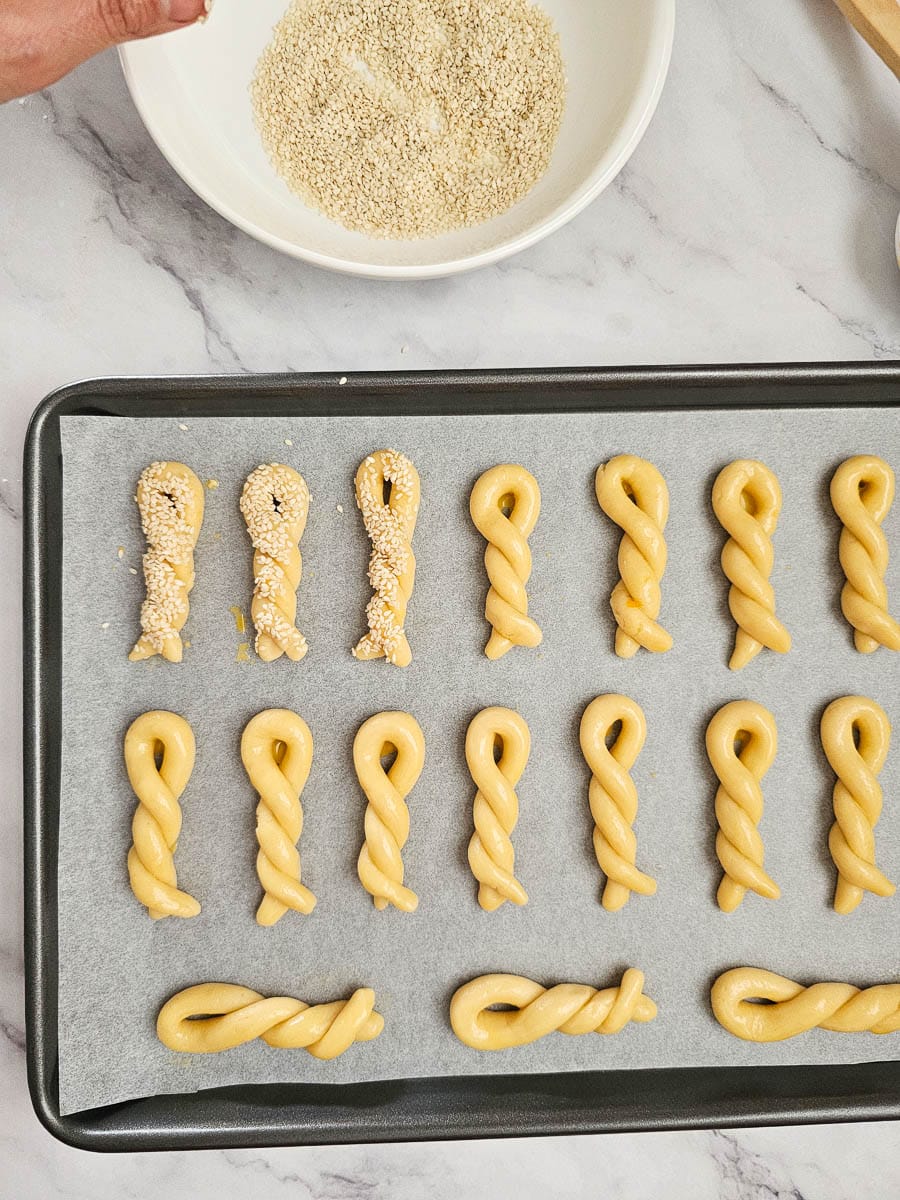
12. Place on a baking tray lined with baking paper.
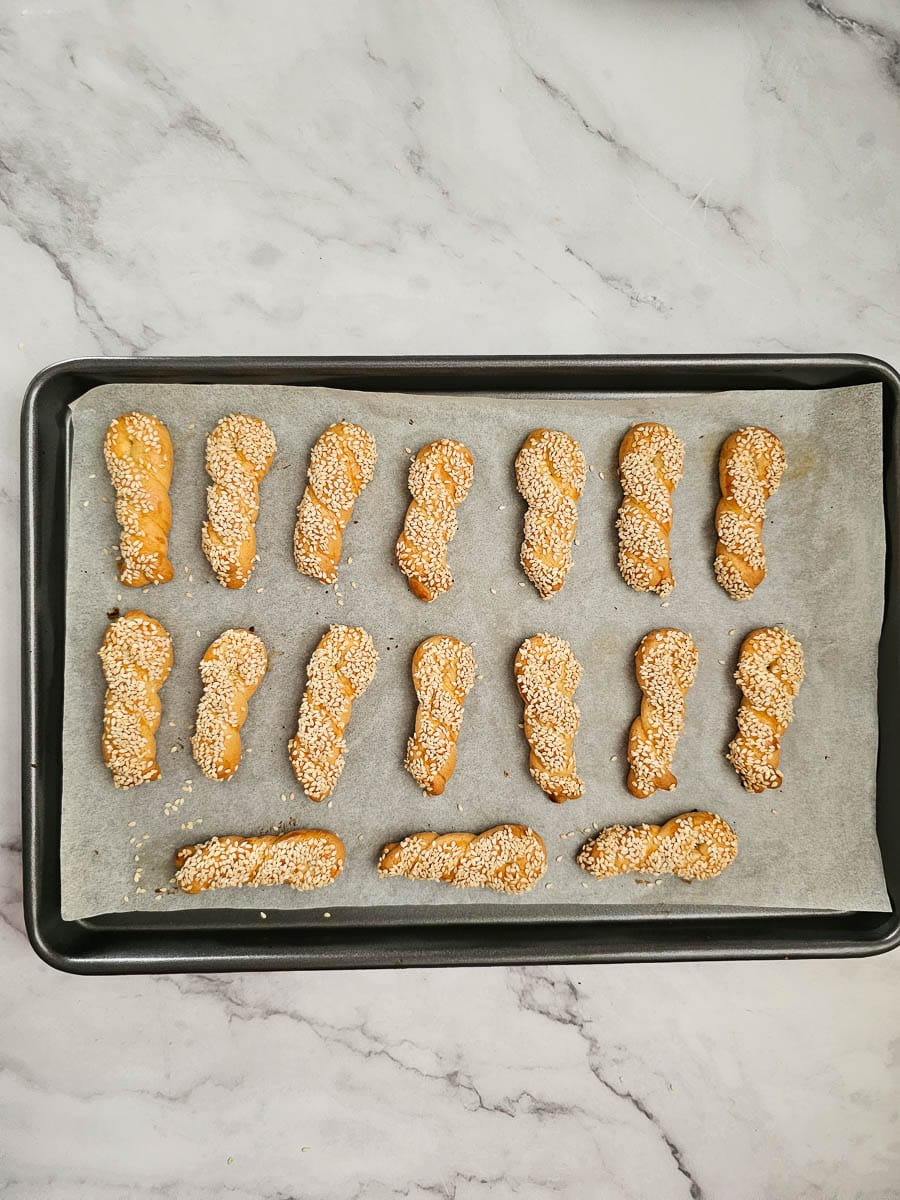
13. Bake in the oven for 18–20 minutes, or until lightly golden.
Tips for making Koulourakia (Greek Butter Cookies)
Have all ingredients at room temperature
Always use softened, room-temperature butter and eggs when making Koulourakia. Properly creamed butter and sugar, combined with room-temperature eggs, create a lighter dough while keeping the cookies crunchy. Avoid melted butter, which can make the cookies spread and lose their classic texture.
Avoid overmixing the dough
Once the flour is added, mix gently and stop as soon as the dough comes together. Folding the final bit of flour in by hand gives the best texture.
Adjust flour for perfect crunchy Koulourakia
Flour amounts can vary depending on egg size and humidity. Add the remaining flour gradually until the dough is soft but no longer sticky. Too much flour can cause Koulourakia to crack during baking.
Resting the dough improves shape and texture
Chilling the dough before baking helps the cookies hold their shape, improves texture, and enhances flavour. For more on why resting cookie dough makes better cookies, see Food & Wine.
Shape Koulourakia evenly for even baking
Shaping each cookie to a similar size ensures they bake evenly. Uneven cookies can brown too quickly or remain underbaked. Weighing portions helps achieve consistent results.
Egg yolk glaze for golden Koulourakia
Brushing the cookies with an egg yolk glaze gives Koulourakia their signature golden colour. Adding a little sugar helps the tops caramelise, enhancing both flavour and appearance. Adding a small amount of water makes the glaze easier to brush on.
Bake at the right temperature
Bake Koulourakia at a moderate oven temperature to prevent over-browning. If baking multiple trays, rotate them halfway through baking for even colour. Slow, even baking helps the cookies maintain their crunchy texture.
Frequently asked questions about Koulourakia
What are Koulourakia?
Koulourakia are traditional Greek butter cookies, most commonly made during Easter but also enjoyed year-round. They are typically flavoured with vanilla or citrus and finished with an egg wash for a golden colour. Depending on the recipe, Koulourakia can be soft or crunchy.
Can I make Koulourakia without alcohol?
Yes, Koulourakia can be made without alcohol. You can substitute the brandy or whisky with vanilla essence or vanilla extract. The flavour will still be great, with a slightly milder aroma.
Can I prepare Koulourakia dough ahead of time?
Yes, the dough can be prepared ahead of time and refrigerated for up to 24 hours. Chilling the dough makes it easier to shape and helps the cookies hold their form during baking. Let the dough sit at room temperature for a few minutes before shaping if it feels too firm.
You can also freeze the dough for longer storage. It’s best to portion the dough before freezing, as the outside can soften while the inside remains frozen during thawing. Shape it into logs, wrap each tightly in cling wrap, and place them in a freezer-safe bag or container. Frozen dough can be stored for up to two months. Thaw in the refrigerator overnight, or for smaller portions, a few hours at room temperature, before shaping and baking.
Can you freeze Koulourakia?
Yes, Koulourakia freeze very well. Once baked and completely cooled, store them in an airtight container or freezer-safe bag for up to two months. Thaw at room temperature before serving.
What do you serve with Koulourakia?
Koulourakia are traditionally served with Greek coffee or tea. They are also commonly offered alongside other Greek biscuits such as Kourambiedes, Melomakarona, or Paximadia, especially during holidays or memorials.
You may also like…
)
Best Greek Koulourakia (Greek Butter Cookies)
100
cookies1
hour20
minutes30
minutes1
hour50
minutesIf you love a crunchy biscuit that keeps well and pairs perfectly with coffee, these Koulourakia might just become your new favourite. In Greek homes, certain biscuits are always on hand for guests, for coffee, and for moments of remembrance. These Koulourakia are one of them.
Keep the screen of your device on
Ingredients
250 grams unsalted butter, softened (8.8 oz)
3/4 cup caster sugar (165 g / 5.8 oz)
1 whole egg
1 egg white (save yolk for brushing)
1/3 cup milk (80 ml / 2.7 fl oz)
3 teaspoons vanilla essence (15 ml / 0.5 fl oz)
2 teaspoons whisky/brandy (10 ml / 0.34 fl oz) (Note 1)
1 teaspoon baking powder (5 g / 0.18 oz)
4 2/3 cups self-raising flour (700 g / 24.7 oz)
- For glaze
2 egg yolks (Note 2)
1/2 teaspoon sugar (2.5 g / 0.09 oz)
1/2 teaspoon water (2.5 ml / 0.08 fl oz)
2/3 cup sesame seeds (100 g / 3.5 oz)
Instructions
- Preheat oven to 170°C / 340°F.
- Beat butter for 2 minutes.
- Add sugar. Beat on high speed for 3-5 minutes until mixture is creamy.
- Add one whole egg and one egg white and beat on medium speed for a minute.
- Add milk, vanilla essence, baking powder and brandy. Beat to combine.
- On low speed, gradually add 2 cups of sifted flour to the mixture.
- Gently fold in the remaining flour with a spatula, one tablespoon at a time, until the dough reaches the right consistency. It should be soft and slightly sticky, but not stick to your hands when shaping. Be careful not to add too much flour, as this can cause the biscuits to crack during baking. (Note 3)
- If time, wrap with cling wrap and chill for 30 minutes. (Note 4)
- Take tablespoons of dough (about 13–14 g / 0.45–0.5 oz) and roll each into a length of approximately 18–20 cm (7–8 inches), then shape (see photos above).
- Place on a baking tray lined with baking paper and brush with egg yolk mixture. (Note 5)
- Dip the top of each cookie into the sesame seeds.
- Bake in the oven for 18–20 minutes, or until lightly golden.
Notes
- Recipe Notes: 1 Tablespoon = 20 ml / 0.7 fl oz 1 Cup = 250 ml / 8.45 fl oz
- 1. You can substitute brandy or whisky with vanilla essence if preferred.
- 2. I use the leftover egg white to make almond biscuits or I add it to dishes like Greek Scrambled Eggs and Tomatoes (Strapadsada) or Greek Style Potato Omelette.
- 3. Do not overwork the dough as you want your cookies to be light and crunchy. Mix until the ingredients have just combined.
- 4. Chilling the dough makes it easier to shape and enhances the flavour.
- 5. I usually bake one tray while shaping the next batch. If using two baking trays simultaneously, rotate them halfway through baking by placing the bottom tray on the top rack and vice versa to ensure even cooking.
- 6. Store in an airtight container at room temperature. Koulourakia are best enjoyed within 1 to 2 weeks of baking for optimal freshness and flavour. However, they can still be edible for up to 3 weeks, if stored properly.
Did you make this recipe?
Tag @mumsgreekrecipes on Instagram and hashtag it with
Like this recipe?
Follow @mumsgreekrecipes on Pinterest