

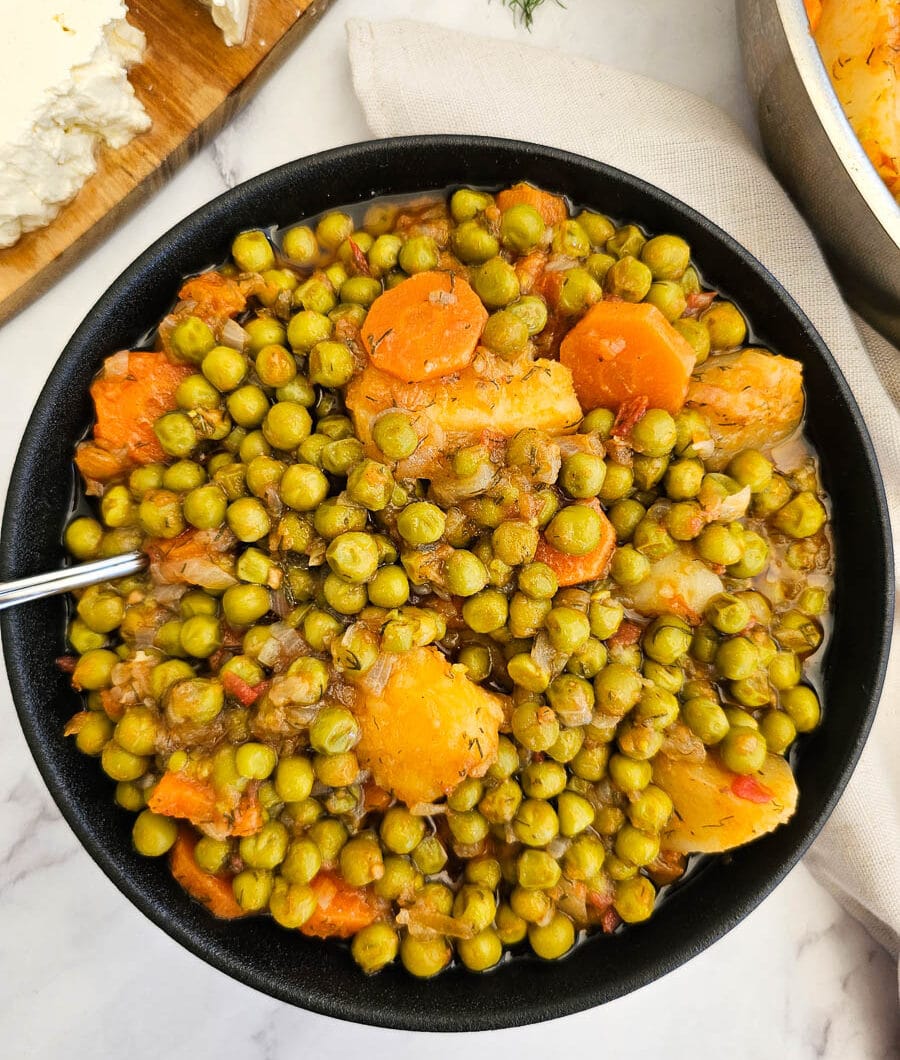
Arakas Latheros (Greek Peas with Potatoes and Carrots) is a simple, nourishing, and flavour-packed stew that’s perfect for weeknight dinners. Tender green peas, potatoes, and carrots are gently cooked in a light tomato and olive oil sauce, allowing the natural sweetness of the vegetables to shine.
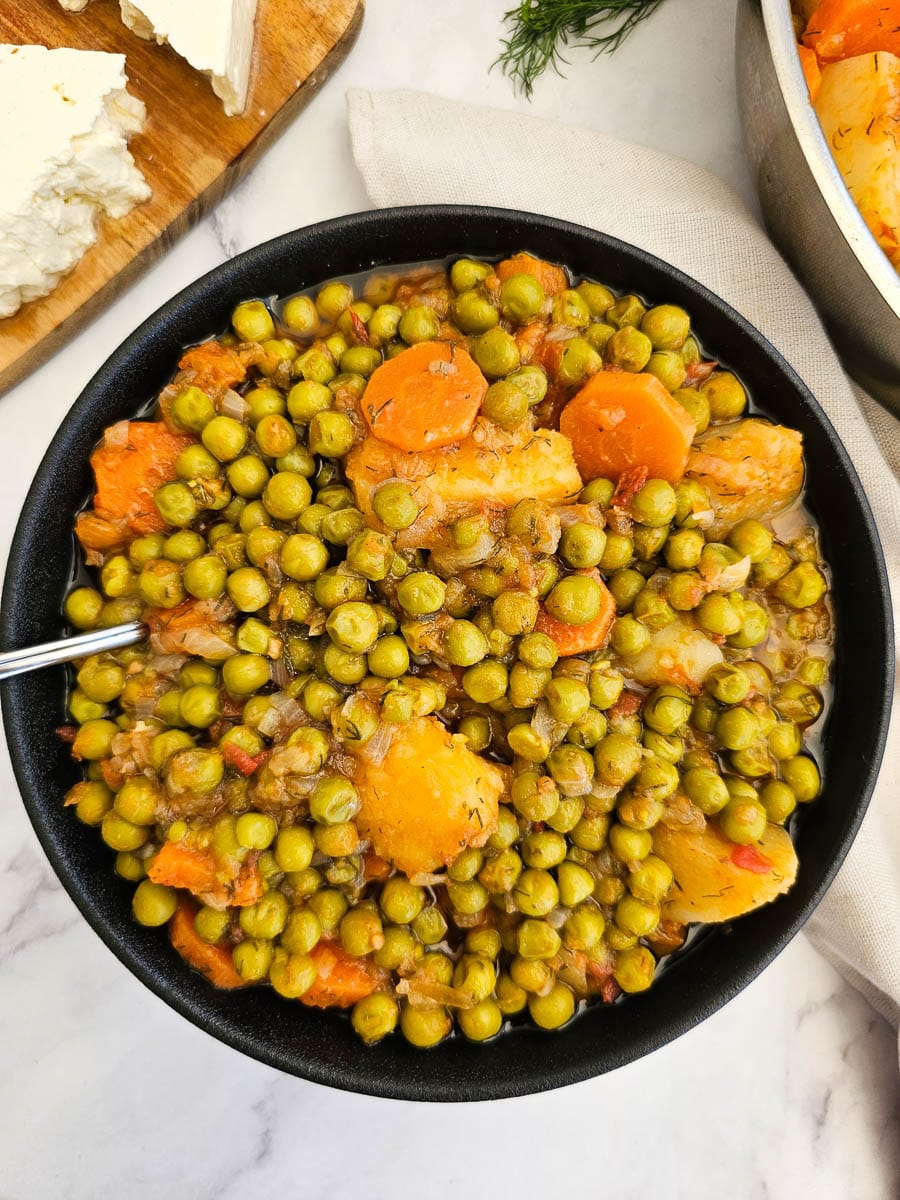
This version is similar to my Greek Peas in Tomato Sauce (Arakas Latheros), which I usually serve as a side dish. Arakas Latheros literally means “peas in olive oil,” a classic Greek method that highlights the natural sweetness of the vegetables. Adding potatoes and carrots turns it into a hearty main course while keeping the recipe simple and quick to prepare.
Traditionally, Arakas Latheros is served at room temperature, allowing the flavours to mellow and the olive oil to shine, giving the dish a glossy, fresh finish. You can also serve it warm, straight from the stove, with crumbled feta and crusty sourdough bread for a simple and satisfying meal.
It pairs beautifully with Taramosalata (Greek Fish Roe Dip), Greek Sesame Bread Rings (Koulouri Thessalonikis), or as a side to grilled meats and fish. For a heartier meal, serve it alongside Soutzoukakia (Greek Meatballs in Tomato Sauce), Biftekia (Beef Patties) with Lemon Potatoes, or grilled fish.
I love making Arakas Latheros because it’s healthy, simple, and full of fresh flavours. The ingredients are usually already in my fridge or freezer, and I always keep a little dill in the freezer, which comes in handy for meals like this.
It’s comforting, healthy, and satisfying, making it a go-to dish any day of the week.
What is Lathera?
This Greek Peas with Potatoes and Carrots is a classic example of “lathera” cuisine, a Greek tradition centered around cooking vegetables with plenty of olive oil. The word “lathera” comes from the Greek word “lathi,” meaning oil. These dishes are a key part of the Mediterranean diet, celebrated for their use of seasonal vegetables and generous olive oil. They offer a healthy, flavourful way to enjoy more vegetables and naturally fit into dairy-free, gluten-free, and vegan diets, making them a versatile staple of Greek vegetarian cuisine.
Here are a few more examples of traditional lathera dishes you might enjoy:
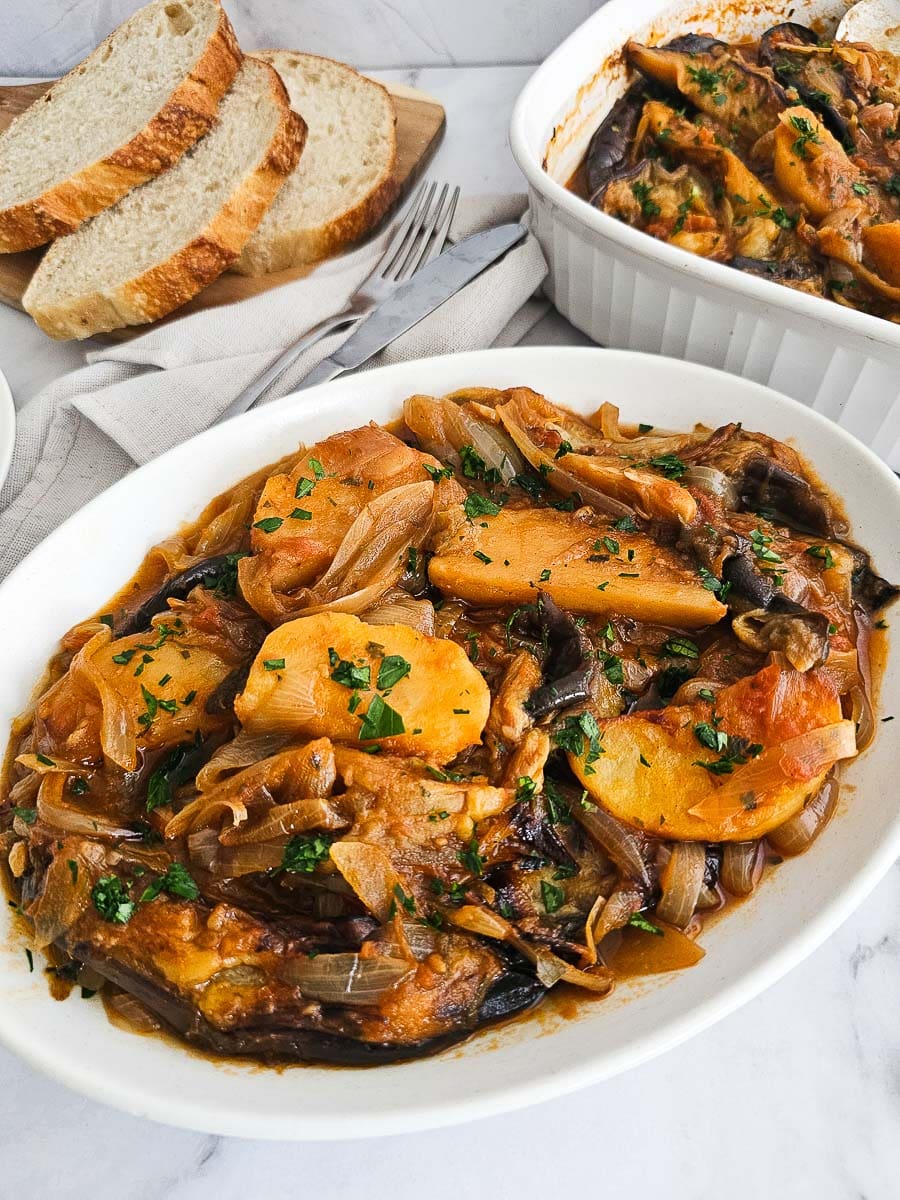
- Eggplant, Potato and Tomato Casserole: Pan-fried eggplant and potatoes in olive oil topped with caramelised onions and baked in a tomato sauce until tender.
- Greek Butter Beans (Gigantes Plaki): Giant white beans baked in a rich tomato sauce with onions, garlic and olive oil.
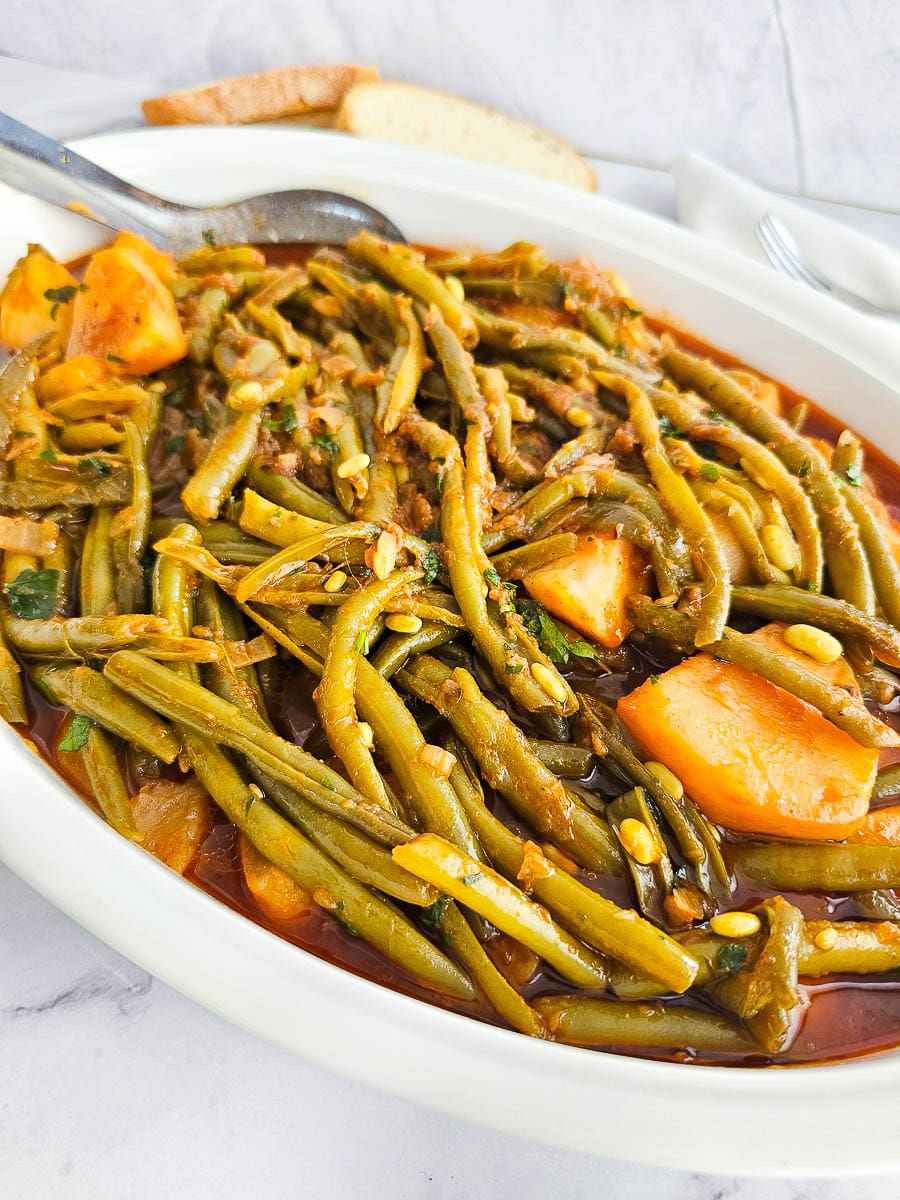
- Greek Green Beans with Potatoes (Fasolakia): Green beans and potatoes are simmered in a savoury tomato and olive oil sauce.
- Greek Stuffed Tomatoes with Rice (Yemista): Tomatoes filled with a flavourful mixture of rice, herbs, and sometimes ground meat.
- Spanakorizo: Spinach and rice cooked with onions, dill, lemon and olive oil.
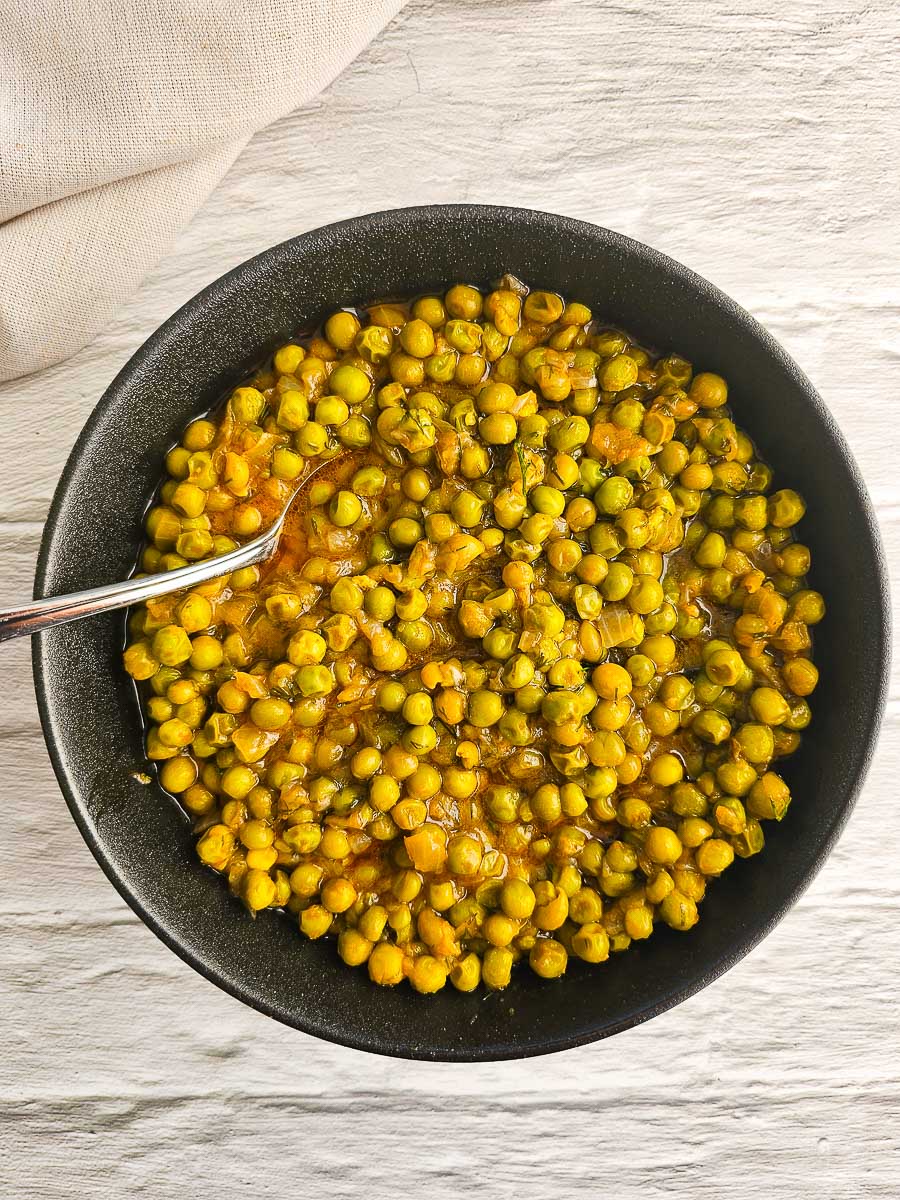
- Greek Peas in Tomato Sauce (Arakas Latheros): Green peas simmered in an olive oil tomato sauce.
- Prasorizo: Leeks cooked with rice.
- Briam: A baked vegetable medley often including potatoes, zucchini, eggplant, tomatoes and onions, all cooked with olive oil.
Ingredients for Arakas Latheros (Greek Peas with Potatoes and Carrots)
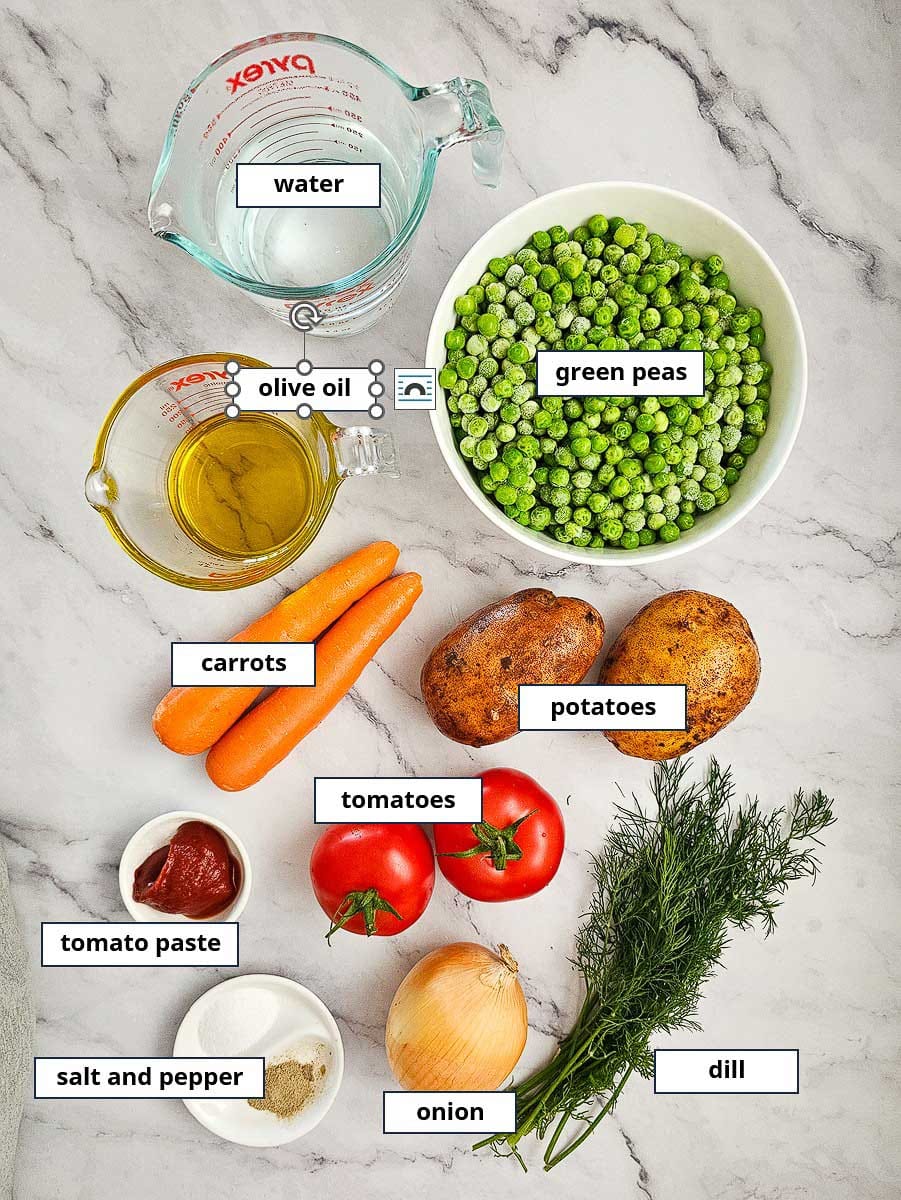
- Peas: You can use either fresh or frozen peas for this recipe. I prefer frozen peas, as they’re picked and frozen at peak freshness, which helps retain their natural sweetness. If using frozen peas, let them thaw first. Adding them straight from the freezer can make the dish slightly watery, so you may need to simmer a little longer to allow the excess liquid to evaporate.
- Olive oil: Don’t skimp on the olive oil, it’s what gives this dish its rich, flavourful “lathero” quality. Use extra virgin olive oil for the best flavour.
- Onion: Finely dice the onion and cook it gently. Slow simmering allows it to soften properly and develop its natural sweetness, which enhances the overall flavour of the dish.
- Potatoes: Choose all-purpose potatoes, such as Yukon Gold or Russet potatoes, which hold their shape well when cooked in a stew or sauce.
- Carrots: Slice the carrots evenly so they cook at the same rate as the potatoes. They add a subtle sweetness that balances the tomato and olive oil beautifully.
- Tomatoes: Sometimes I add tomato puree/passata or tinned crushed tomatoes or diced tomatoes instead of fresh tomatoes.
- Dill: Fresh dill works best, but dried dill can be used as an alternative, just use a little less if using dry. I like to keep fresh dill in the freezer so it’s always on hand for dishes like this.
Each of these dishes follows the same simple, healthy principles of lathera cooking – fresh ingredients, olive oil, and slow cooking to bring out natural flavours.
How to make Arakas Latheros (Greek Peas with Potatoes and Carrots)
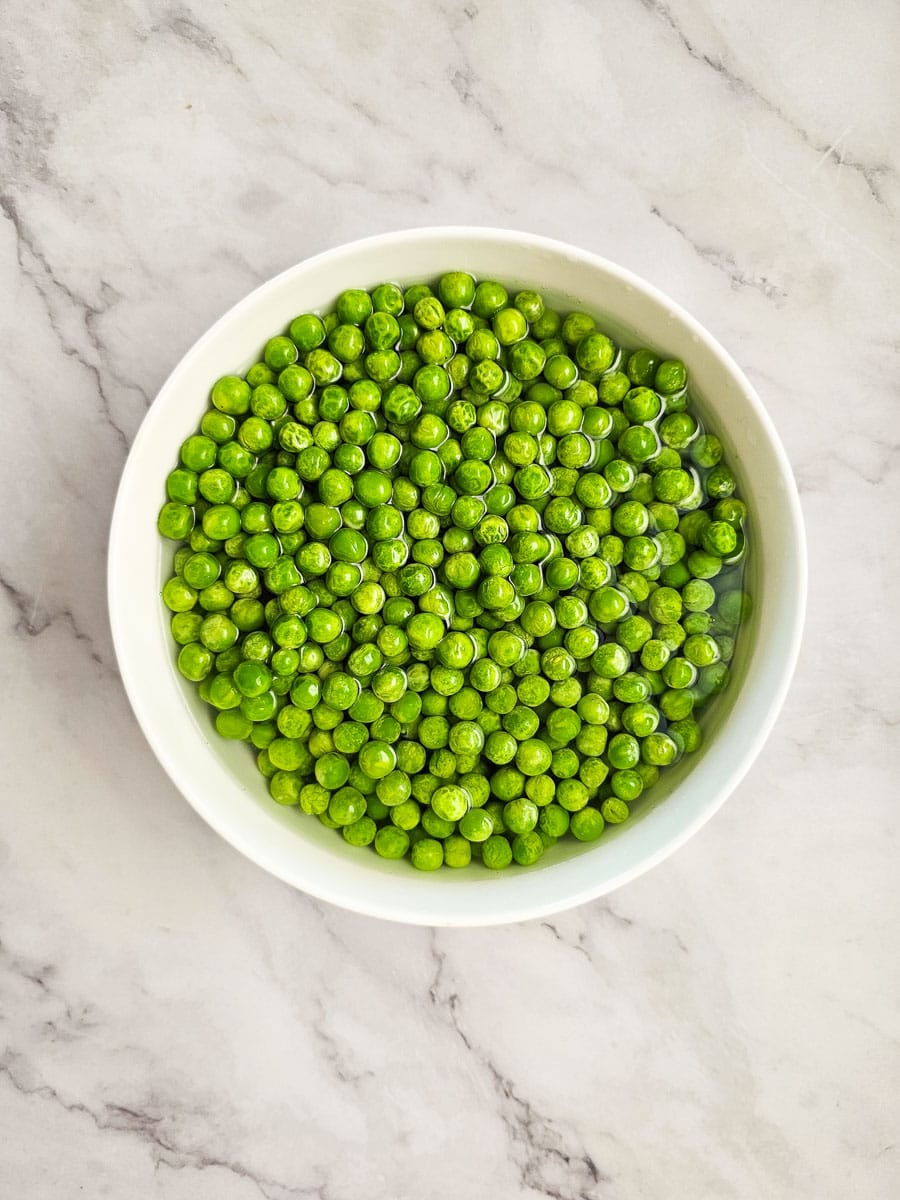
1. Take peas out of the freezer to thaw. Place in a bowl and cover with cold water for 10–15 minutes, then drain well before using.
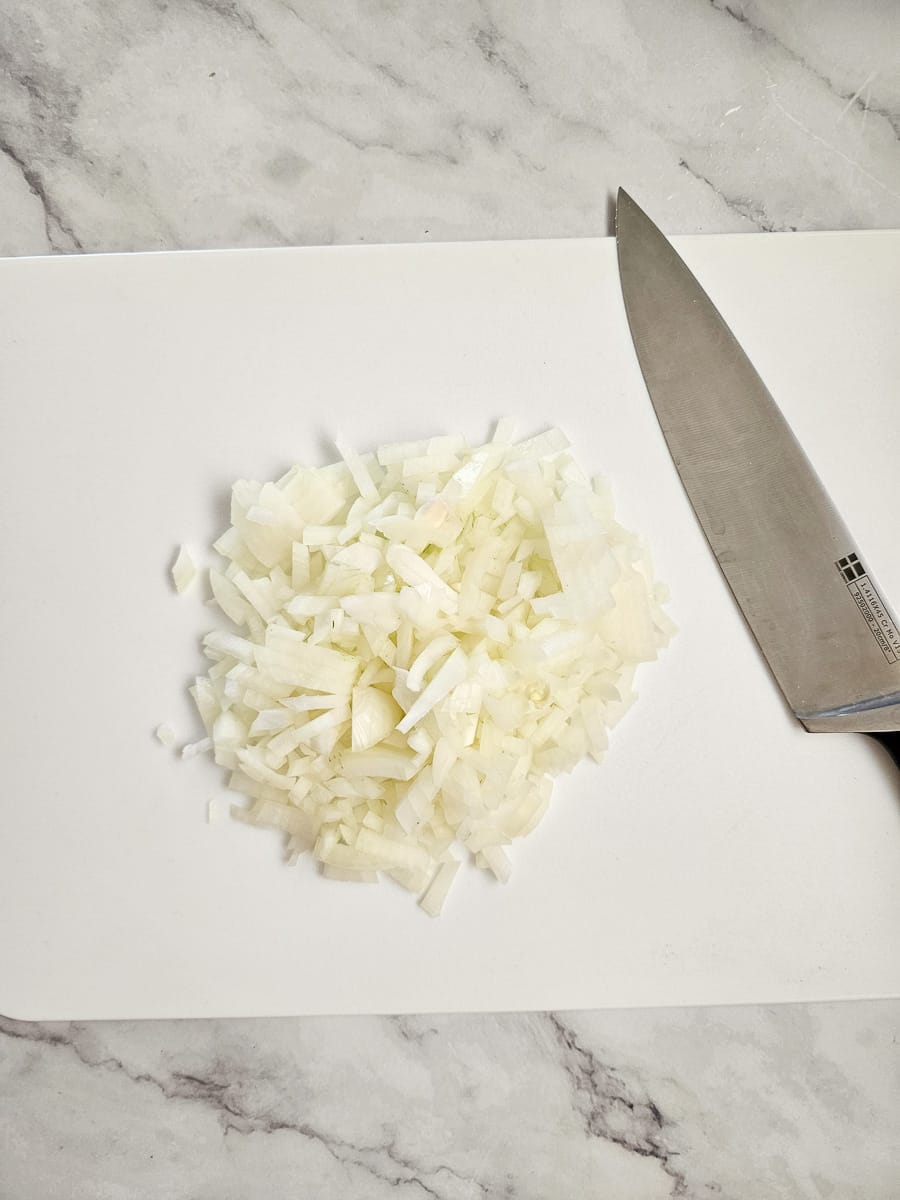
2. Finely dice the onion.
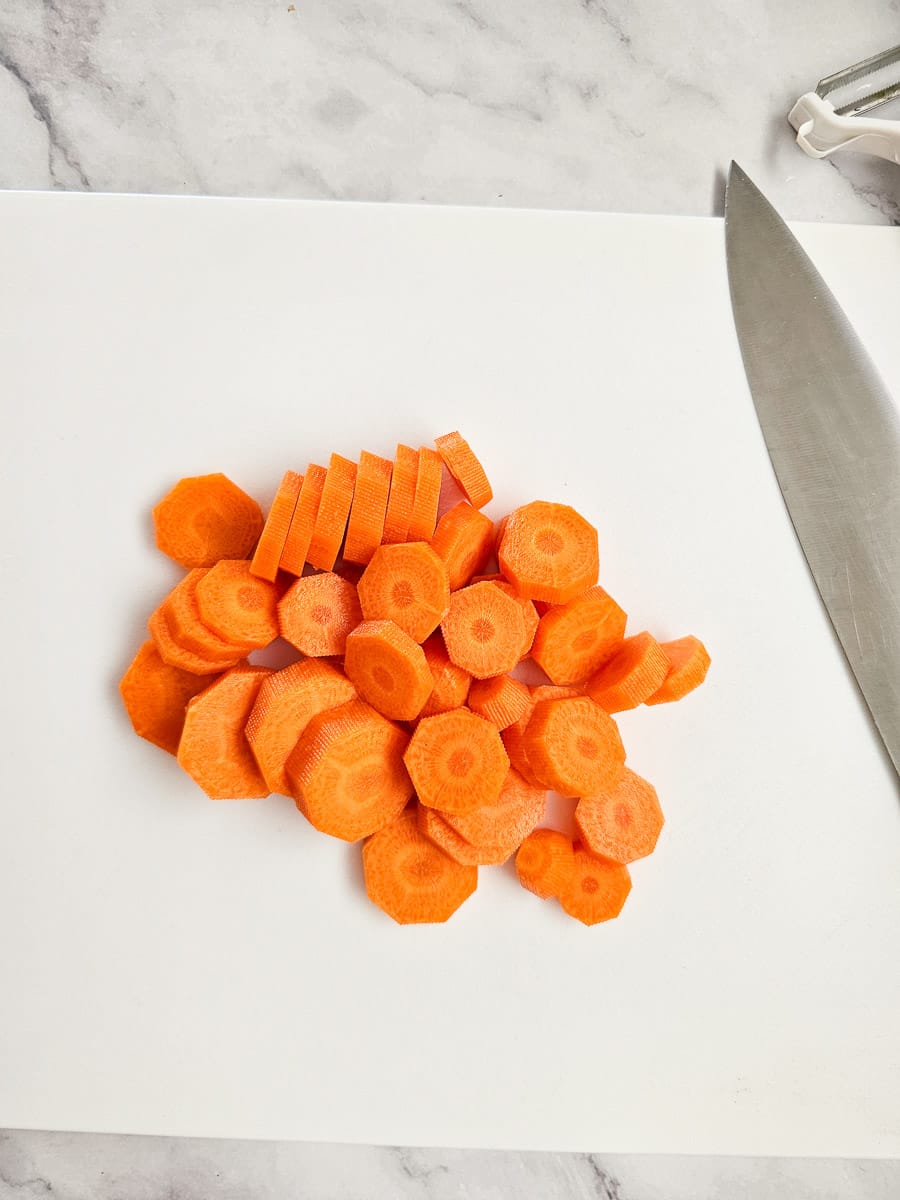
3. Peel and slice the carrots into 1 cm pieces.
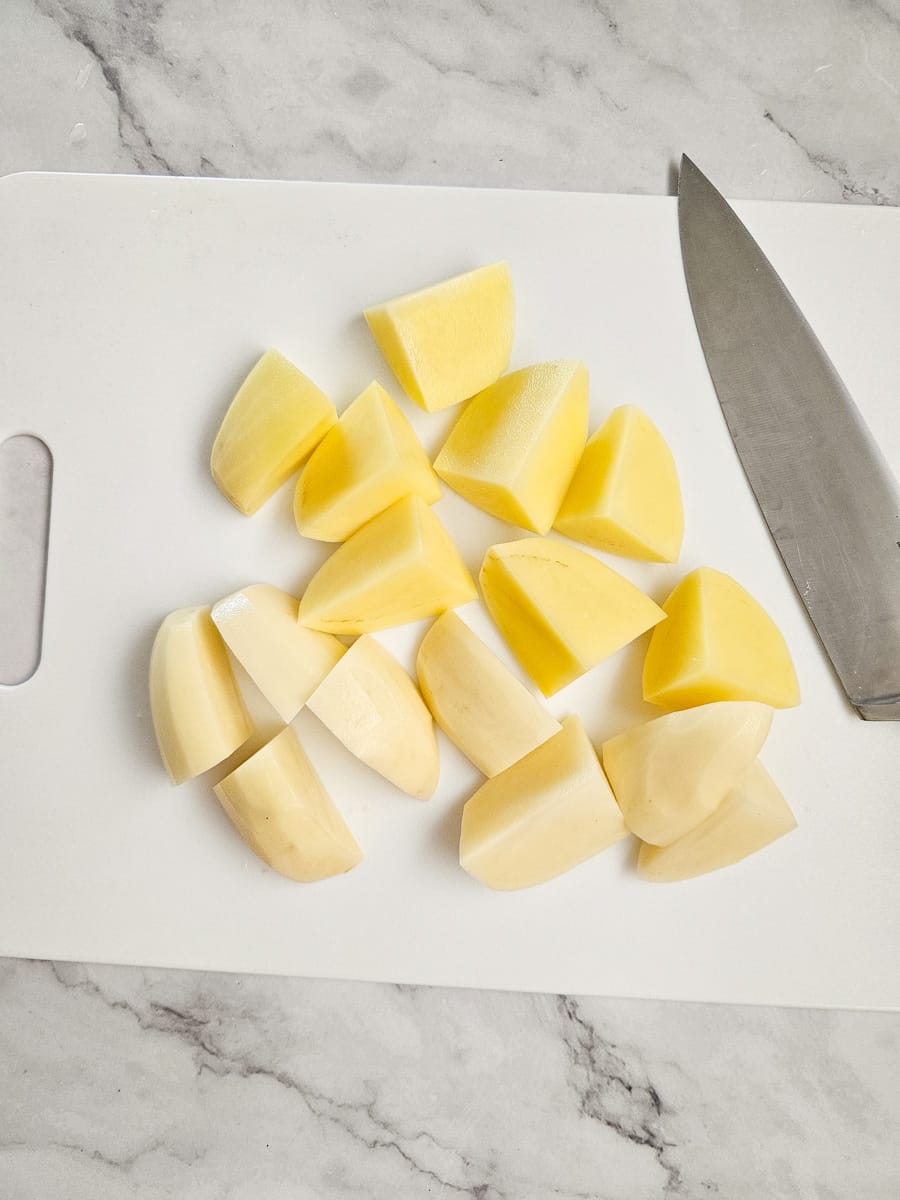
4. Peel, quarter, and halve the potatoes.
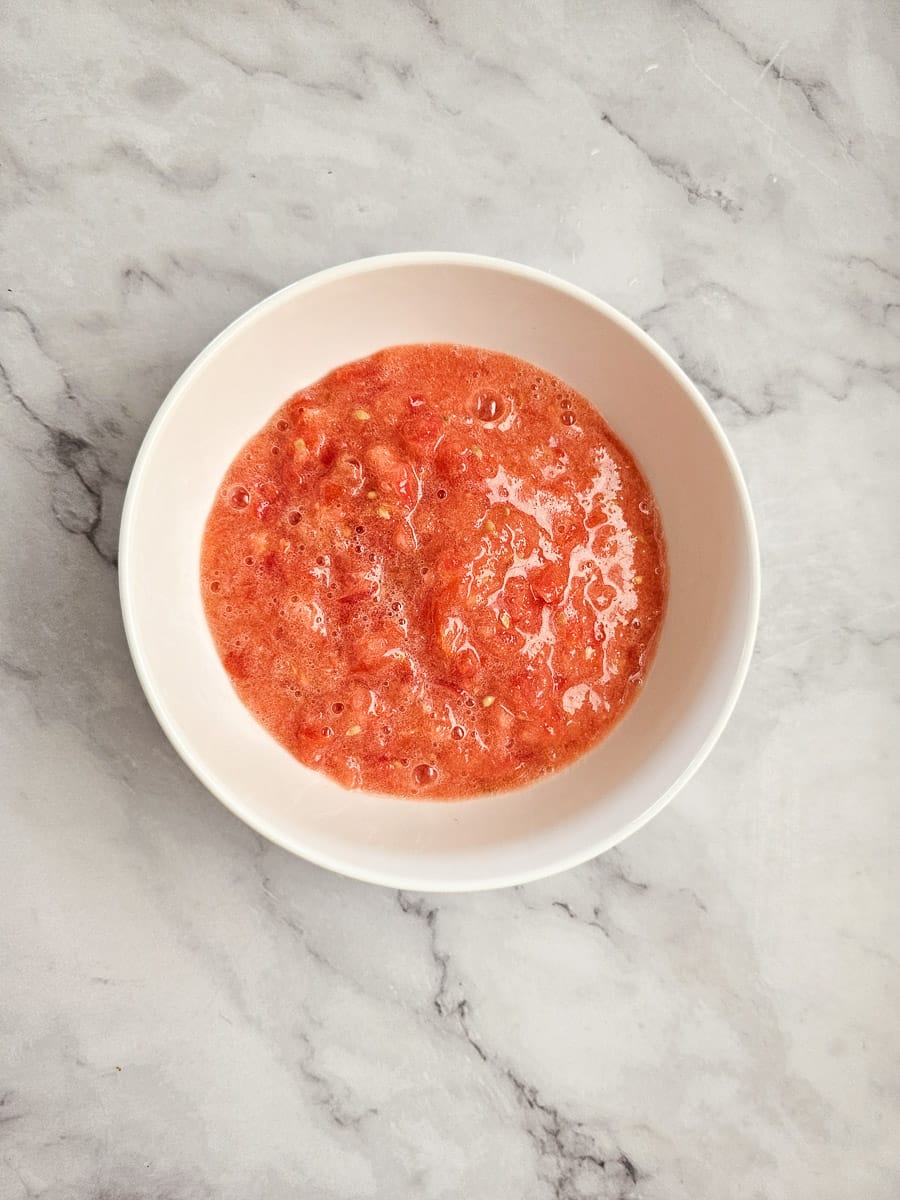
5. Grate or process the tomatoes.
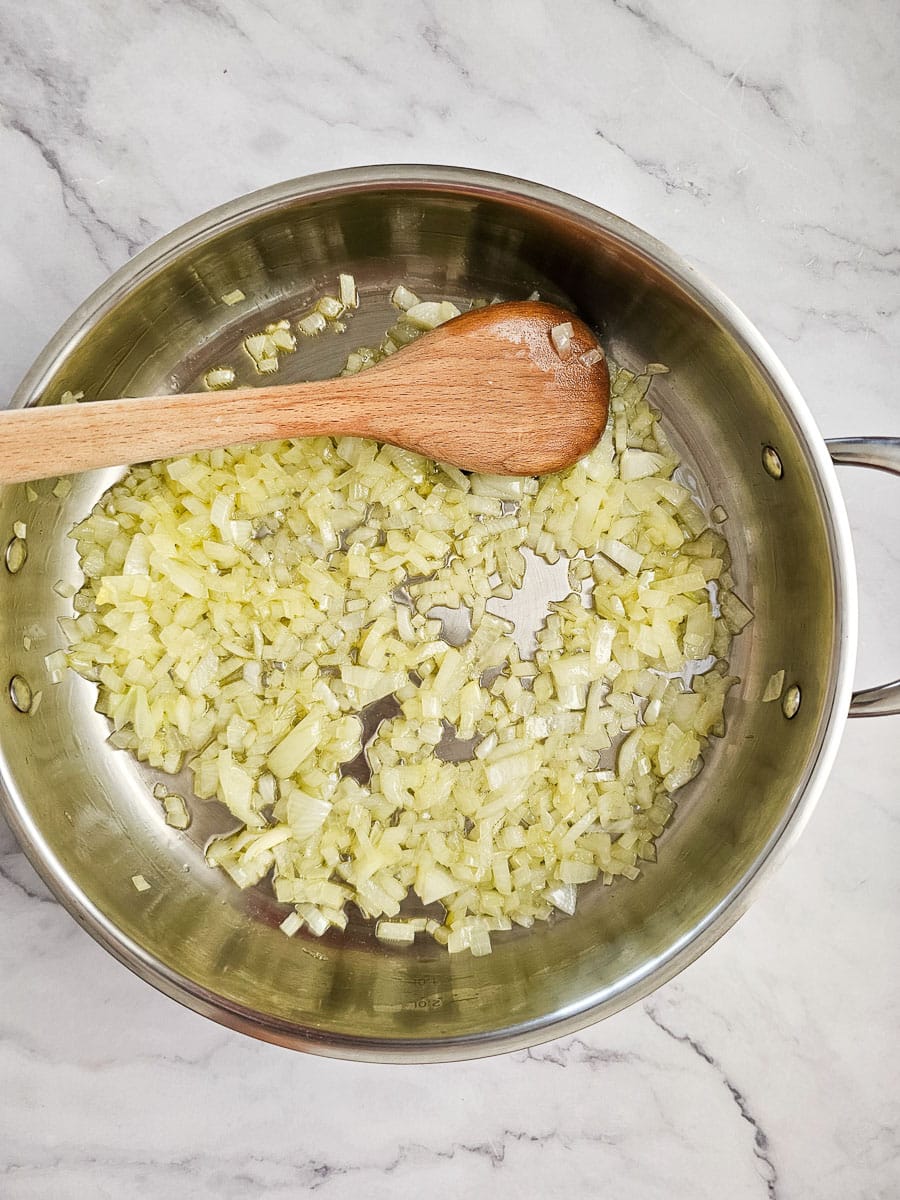
6. Heat ¼ cup (60 ml / 2 fl oz) olive oil in a medium saucepan over medium heat. Sauté the onions for 2–3 minutes until soft and translucent.
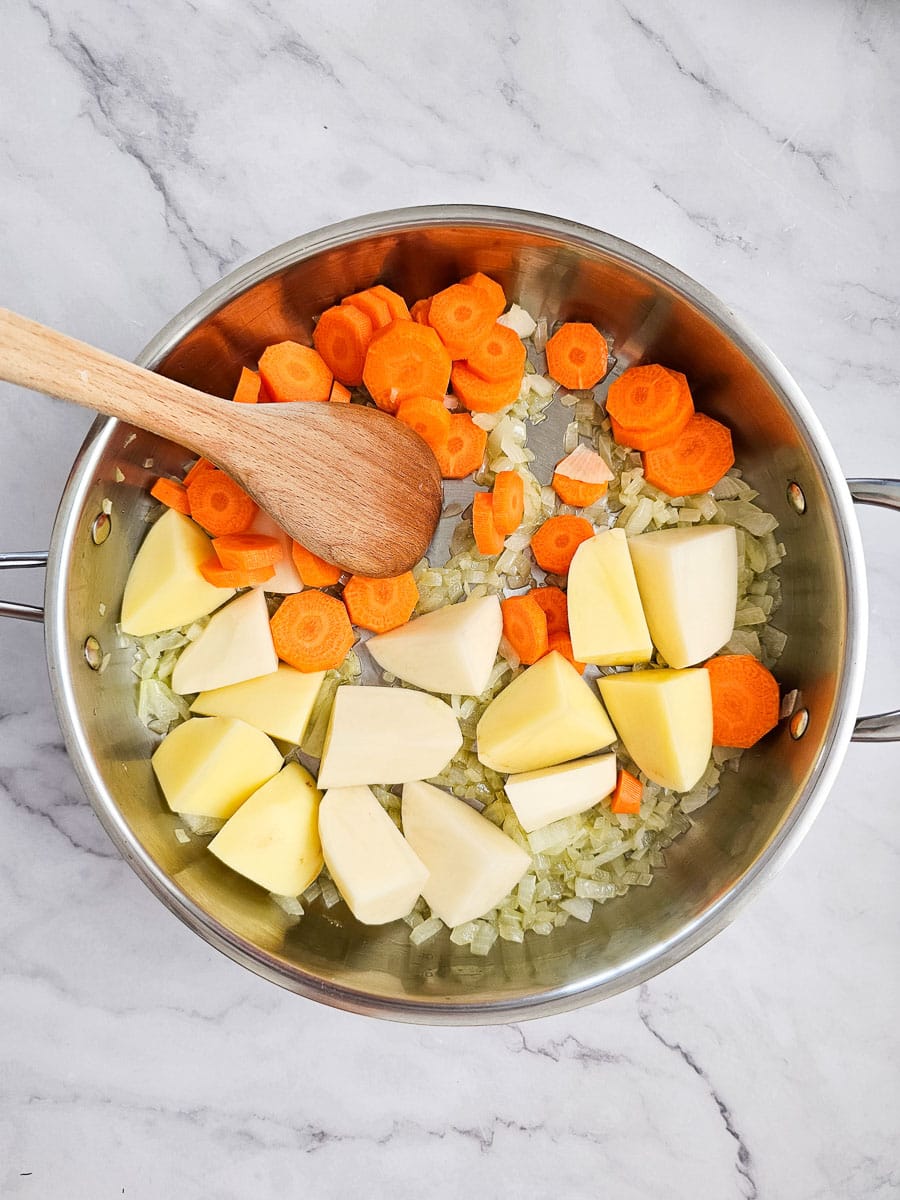
7. Add the potatoes and carrots and cook for 2–3 minutes.
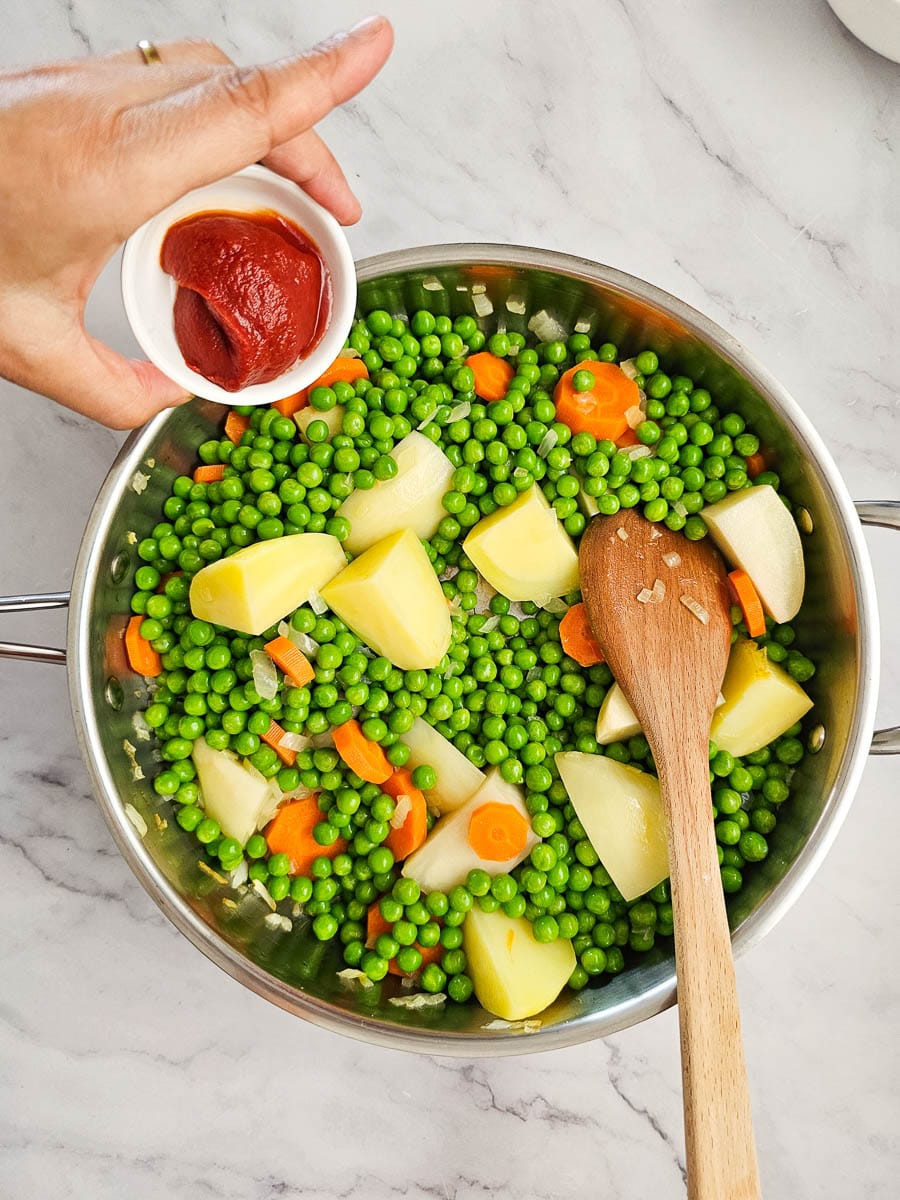
8. Add the peas, stir in the tomato paste, and cook for 1 minute to coat the vegetables evenly.
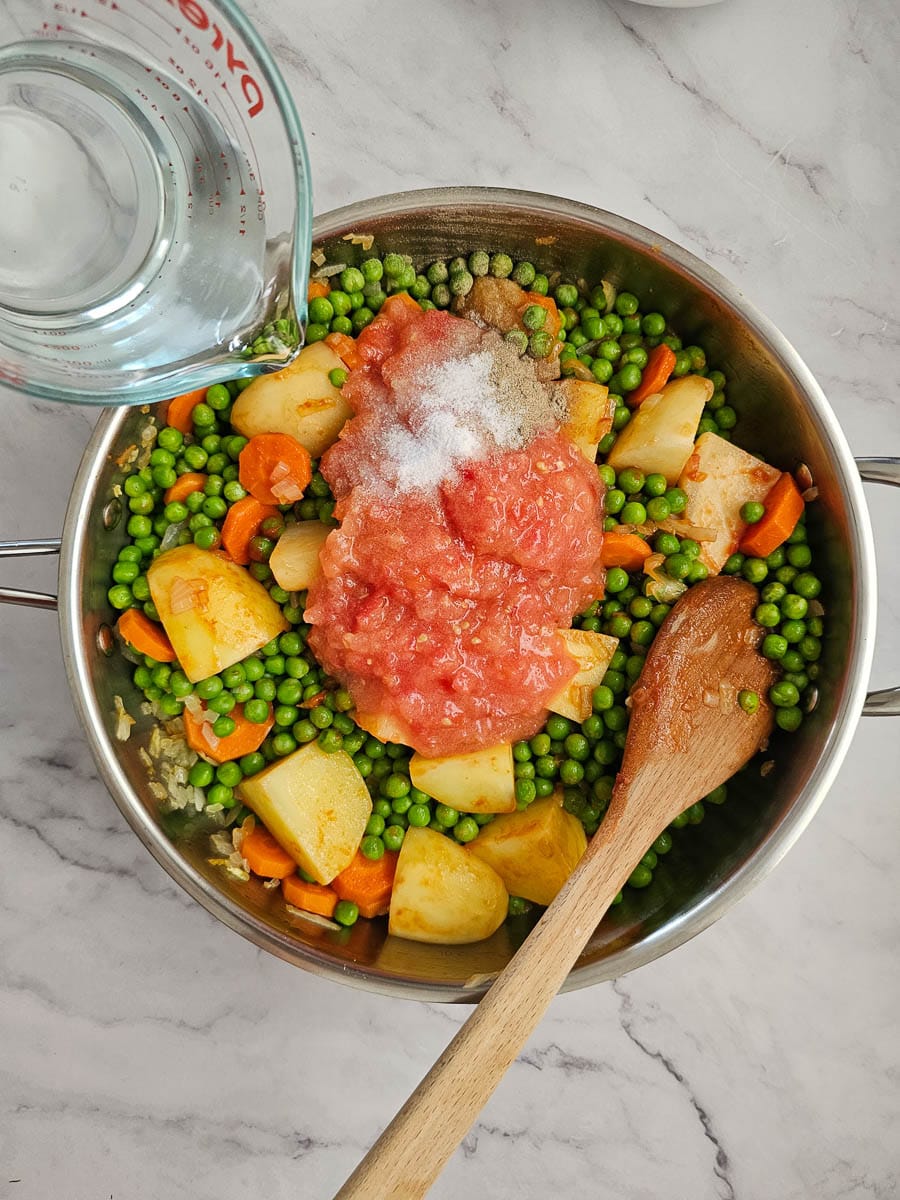
9. Add the fresh tomatoes, water, salt, and pepper. Bring to a boil.
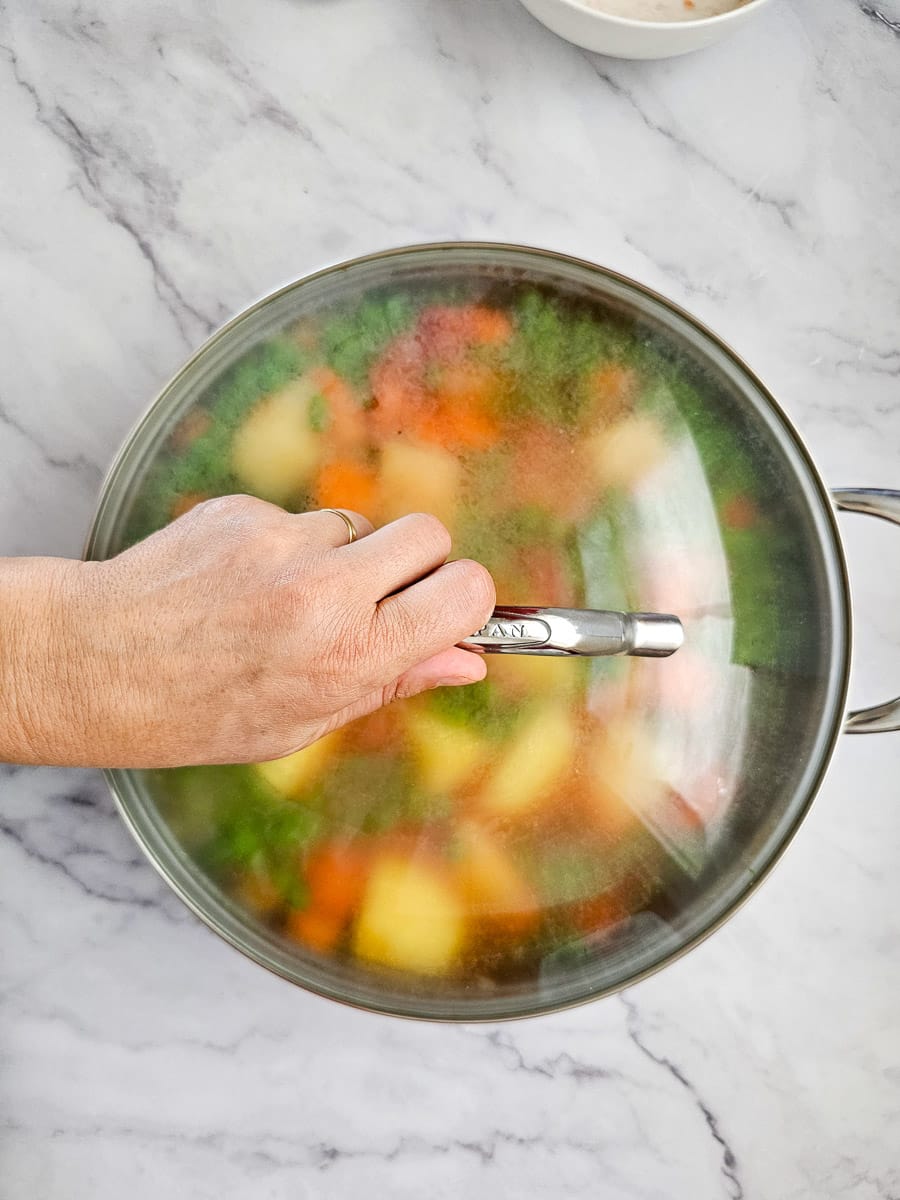
10. Reduce heat to a gentle simmer, cover, and cook for about 30 minutes, or until the potatoes and carrots are tender.
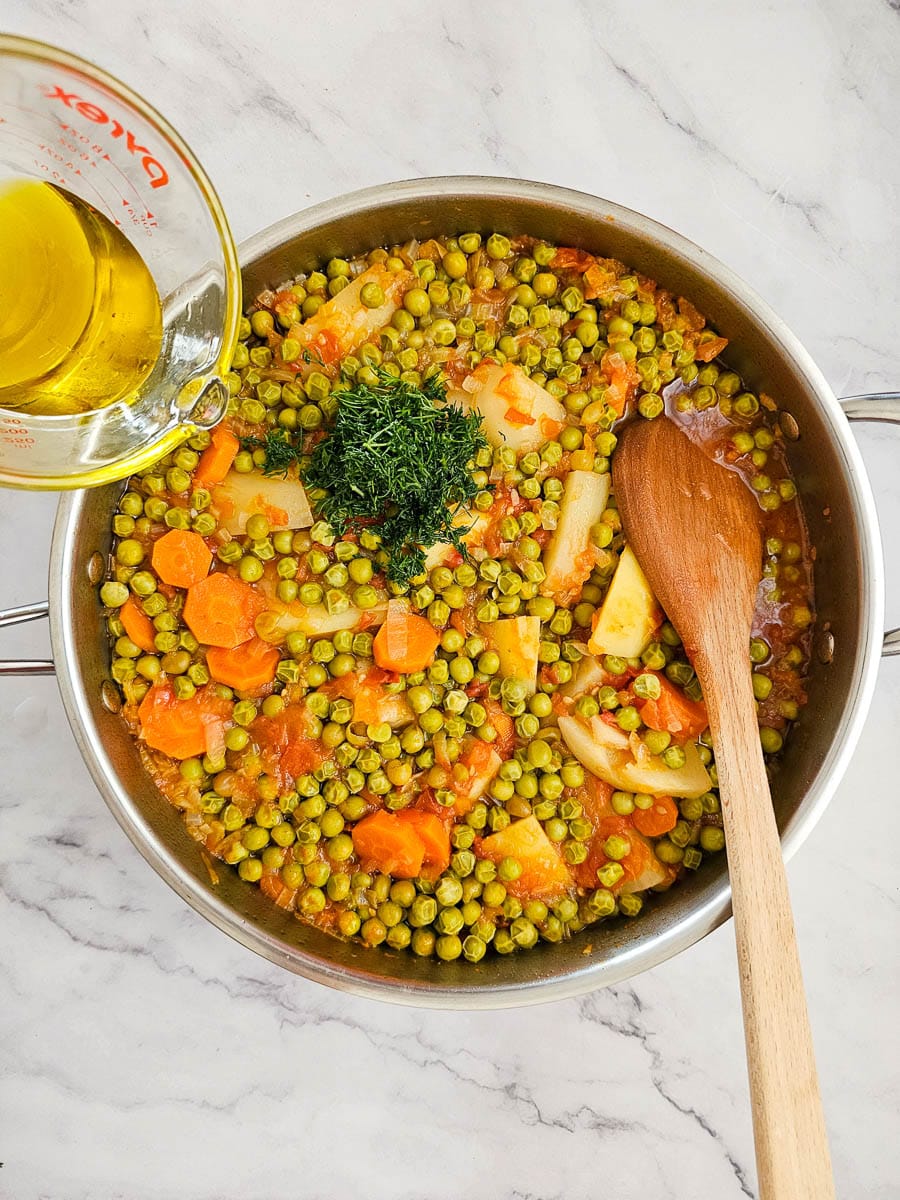
11. Add the remaining ¼ cup (60 ml / 2 fl oz) olive oil and the dill.
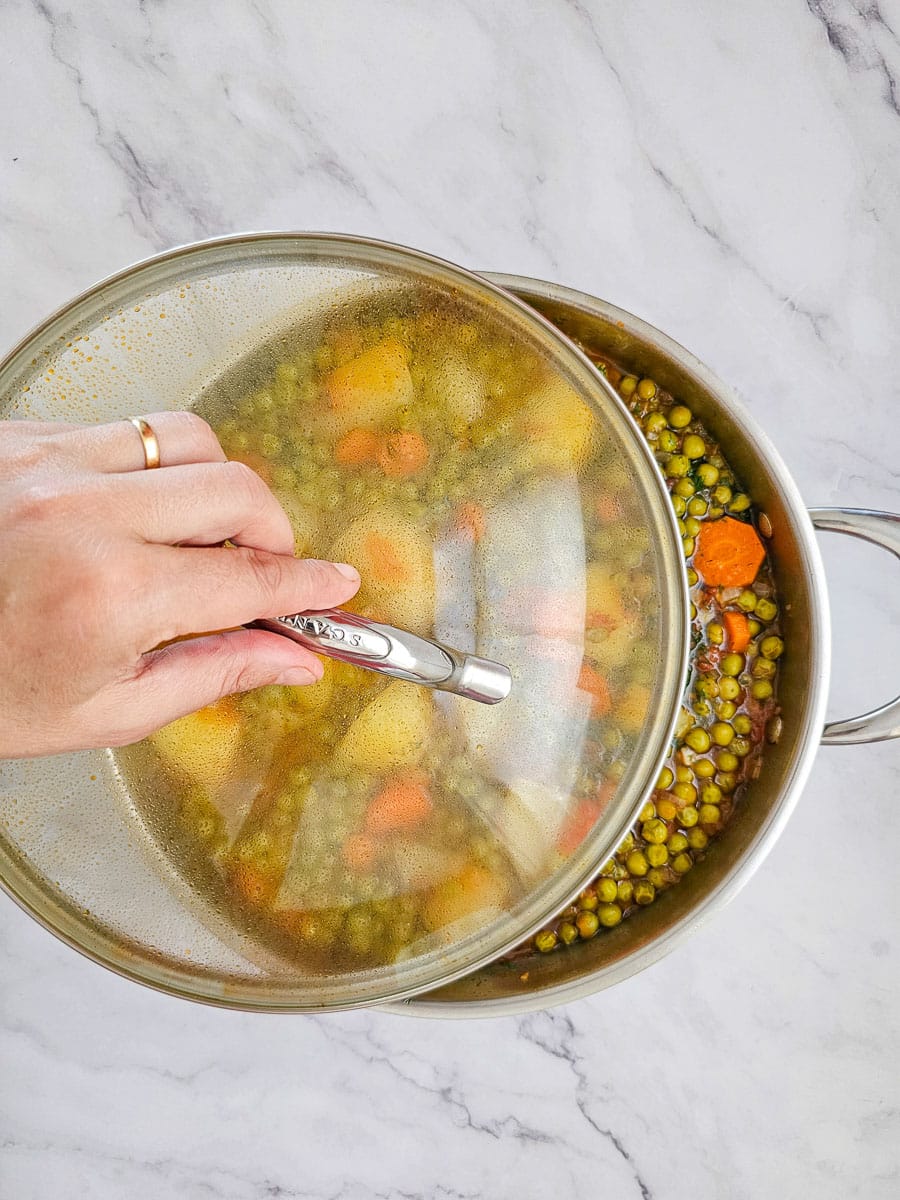
12. Continue to simmer partially covered for 10 minutes.
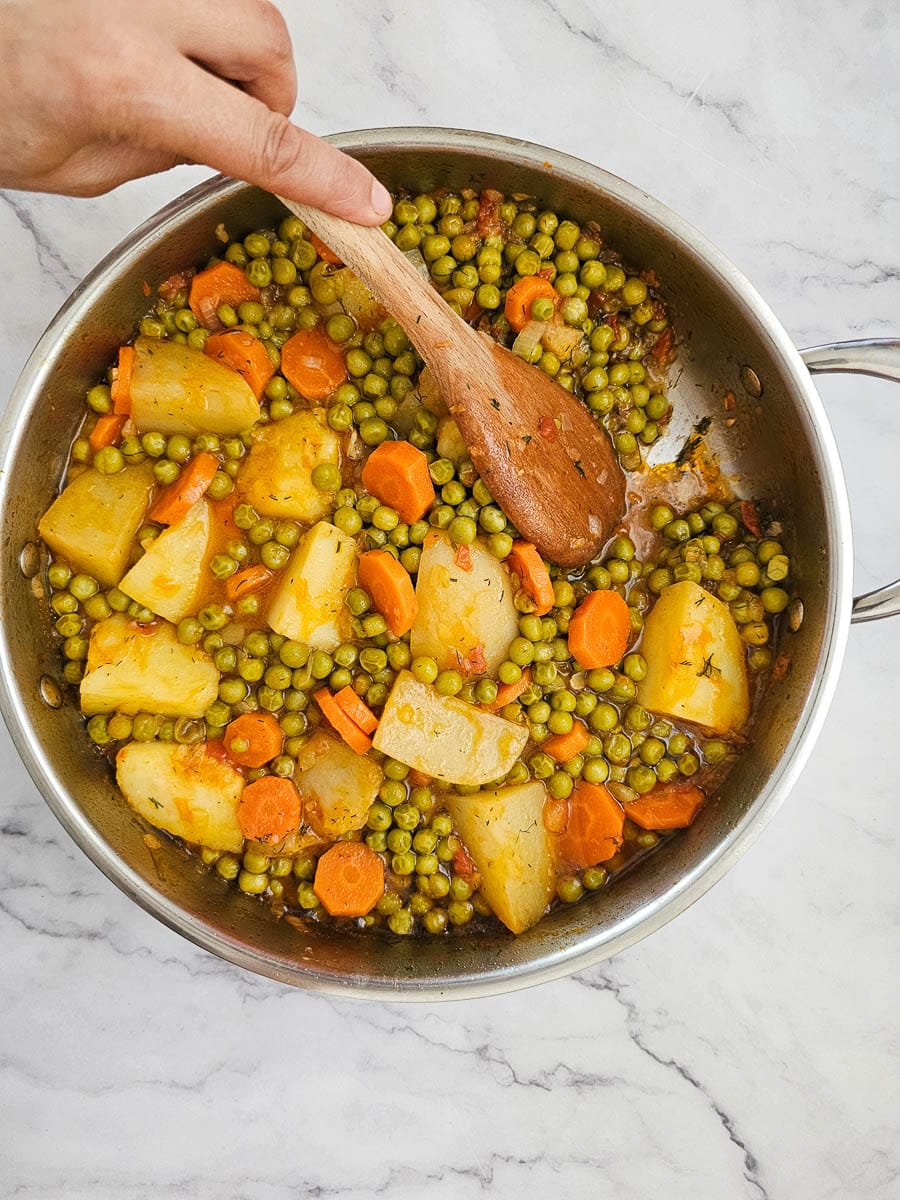
13. Or until the peas are soft and most of the water has evaporated.
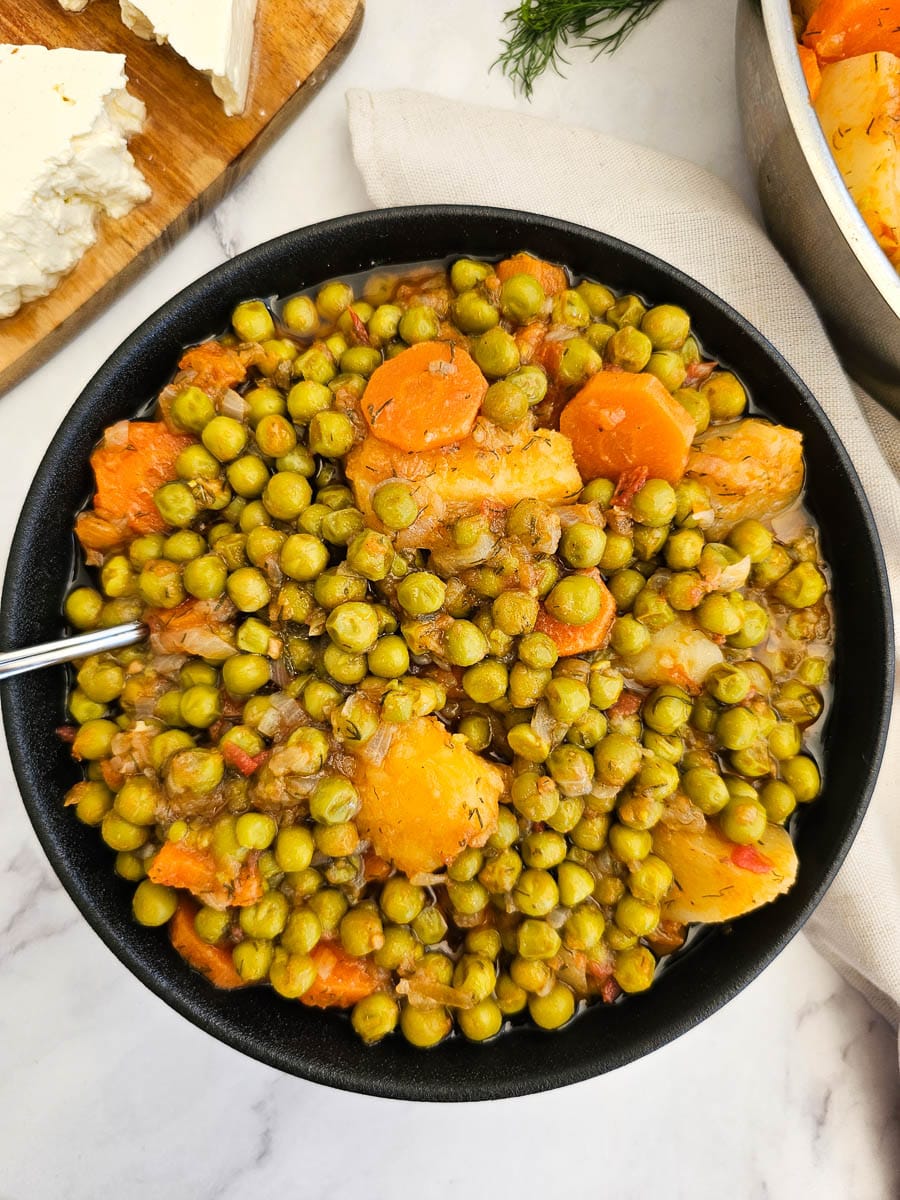
14. Serve warm or at room temperature with crumbled feta and crusty sourdough bread.
Health benefits of Arakas Latheros (Greek Peas with Potatoes and Carrots)
Peas are packed with vitamins A, C, and K, as well as fibre and plant-based protein. Vitamin A supports healthy vision and skin, vitamin C boosts immunity and helps with collagen production, and vitamin K contributes to strong bones and proper blood clotting. The fibre in peas aids digestion and promotes a healthy gut, while the protein supports muscle repair and growth. For more information on the health benefits of peas, check out this article on WebMD: Health Benefits of Peas.
Potatoes add additional fibre, potassium, and vitamin C, supporting heart health and keeping you feeling full and satisfied. Carrots provide beta-carotene, which the body converts into vitamin A, supporting eye health and a strong immune system. Tomatoes contribute antioxidants like lycopene, which may help protect cells and support heart health. Finally, extra virgin olive oil, essential in any lathera dish, offers heart-healthy monounsaturated fats and helps your body absorb fat-soluble vitamins from the vegetables, while adding flavour and a glossy, satisfying finish.
Altogether, this dish is light, nourishing, and full of natural flavours, making it a wholesome main course that’s both comforting and good for you.
Tips for making Arakas Latheros (Greek Peas with Potatoes and Carrots)
Defrost your frozen peas
If you have time, thaw your frozen peas. Place them in a bowl of cold water for 10–15 minutes or let them sit at room temperature for 30–45 minutes. Drain well before using. Thawing allows the peas to cook more evenly and helps maintain their tender texture. Cooking frozen peas directly from frozen can sometimes result in uneven cooking and a slightly mushy texture. Thawed peas generally have a better texture and taste more like fresh peas.
Simmer gently
Cook the peas, potatoes, and carrots over a gentle simmer. This helps the vegetables absorb the flavours of the tomato sauce without becoming mushy. Check doneness towards the end; peas should be tender but still hold their shape, and potatoes should be soft yet firm enough to slice with a fork.
Don’t skimp on the olive oil
Use a generous amount of extra virgin olive oil for the best flavour. After all, it’s a lathera dish, and the olive oil gives it its glossy finish, rich aroma, and authentic Greek taste. Adding some at the end also brightens the flavours and enhances the presentation.
What to serve this dish with
The traditional Greek way is to serve Arakas Latheros at room temperature. This allows the flavours to mellow and the olive oil to shine. It’s also perfectly fine to serve warm, straight from the stove, with crumbled feta and crusty sourdough bread for a simple, satisfying meal.
It also pairs beautifully with the following dishes:
- Taramosalata (Greek Fish Roe Dip)
- Greek Sesame Bread Rings (Koulouri Thessalonikis)
- Soutzoukakia (Greek Meatballs in Tomato Sauce), for a heartier option.
- Grilled meats or fish.
Storage
Leftovers can be stored in the refrigerator for up to 3 days or frozen for up to 3 months. To reheat, thaw overnight in the fridge and warm on the stove or in the microwave until heated through.
You may also like…
)
Arakas Latheros (Greek Peas with Potatoes and Carrots)
4
servings15
minutes45
minutes1
hourKeep the screen of your device on
Ingredients
5 cups green peas, thawed (750 g / 1.65 lb) (Note 1)
1 large onion, finely diced
2 large carrots, peeled and sliced into 1 cm (½ inch) pieces
2 large potatoes (about 500 g / 1.1 lb), peeled, quartered, and halved
2 tomatoes, grated or processed (Note 2)
1/2 cup extra virgin olive oil, divided (120 ml / 4 fl oz) (Note 3)
1 tablespoon tomato paste (20 ml / 0.7 fl oz)
2 cups water (500 ml / 17 fl oz)
1 teaspoon salt, or to taste
1/4 teaspoon pepper, or to taste
3 tablespoons fresh dill, chopped (Note 4)
Instructions
- If using frozen peas, take them out of the freezer to thaw. Place in a bowl, cover with cold water for 10–15 minutes, then drain well before using.
- Finely dice the onion.
- Peel and slice the carrots into 1 cm pieces.
- Peel, quarter, and halve the potatoes.
- Grate or process the tomatoes.
- Heat ¼ cup (60 ml / 2 fl oz) olive oil in a medium saucepan over medium heat. Sauté the onions for 2–3 minutes until soft and translucent.
- Add the potatoes and carrots and cook for 2–3 minutes.
- Add the peas, stir in the tomato paste, and cook for 1 minute to coat the vegetables evenly.
- Add the fresh tomatoes, water, salt, and pepper. Bring to a boil.
- Reduce heat to a gentle simmer, cover, and cook for about 30 minutes, or until the potatoes and carrots are tender.
- Add the remaining ¼ cup (60 ml / 2 fl oz) olive oil and the dill. Taste and adjust seasoning if needed. Continue to simmer partially covered for 10 minutes, until the peas are soft and most of the water has evaporated.
- Remove from heat and let the stew rest for 10–15 minutes.
- Serve at room temperature with crumbled feta and crusty sourdough bread, or serve warm if preferred. (Note 5)
Notes
- Notes: 1 Tablespoon = 20 ml / 0.7 fl oz 1 Cup = 250 ml / 8.45 fl oz
- 1. You can use either fresh or frozen peas for this recipe. I prefer frozen peas, as they’re picked and frozen at peak freshness, which helps retain their natural sweetness.
- 2. Arakas Latheros is traditionally cooked until most of the liquid evaporates, leaving the vegetables coated in olive oil rather than a watery stew. If you prefer a little more sauce, add ¼ cup tomato puree when adding the tomatoes, or a splash of water before serving.
- 3. Don’t skimp on the olive oil, it’s what makes this a true lathera dish. Use extra virgin olive oil for the best aroma, flavour, and glossy finish.
- 4. Fresh dill is best, but frozen dill works too. If using dried dill, reduce the amount slightly.
- 5. This dish is best served at room temperature, but it can also be served warm. It pairs beautifully with crumbled feta, sourdough bread, Taramosalata (Greek Fish Roe Dip), Greek Sesame Bread Rings (Koulouri Thessalonikis), or as a side to grilled meats and fish. For a heartier meal, serve alongside Soutzoukakia (Greek Meatballs in Tomato Sauce).
- 6. Leftovers can be refrigerated for up to 3 days or frozen for up to 3 months. Thaw overnight if frozen and reheat gently on the stove or in the microwave.
Did you make this recipe?
Tag @mumsgreekrecipes on Instagram and hashtag it with
Like this recipe?
Follow @mumsgreekrecipes on Pinterest